Gold and silver are valuable, portable, easy to resell, and frequently counterfeited. That combination makes private transactions riskier than many people realize.
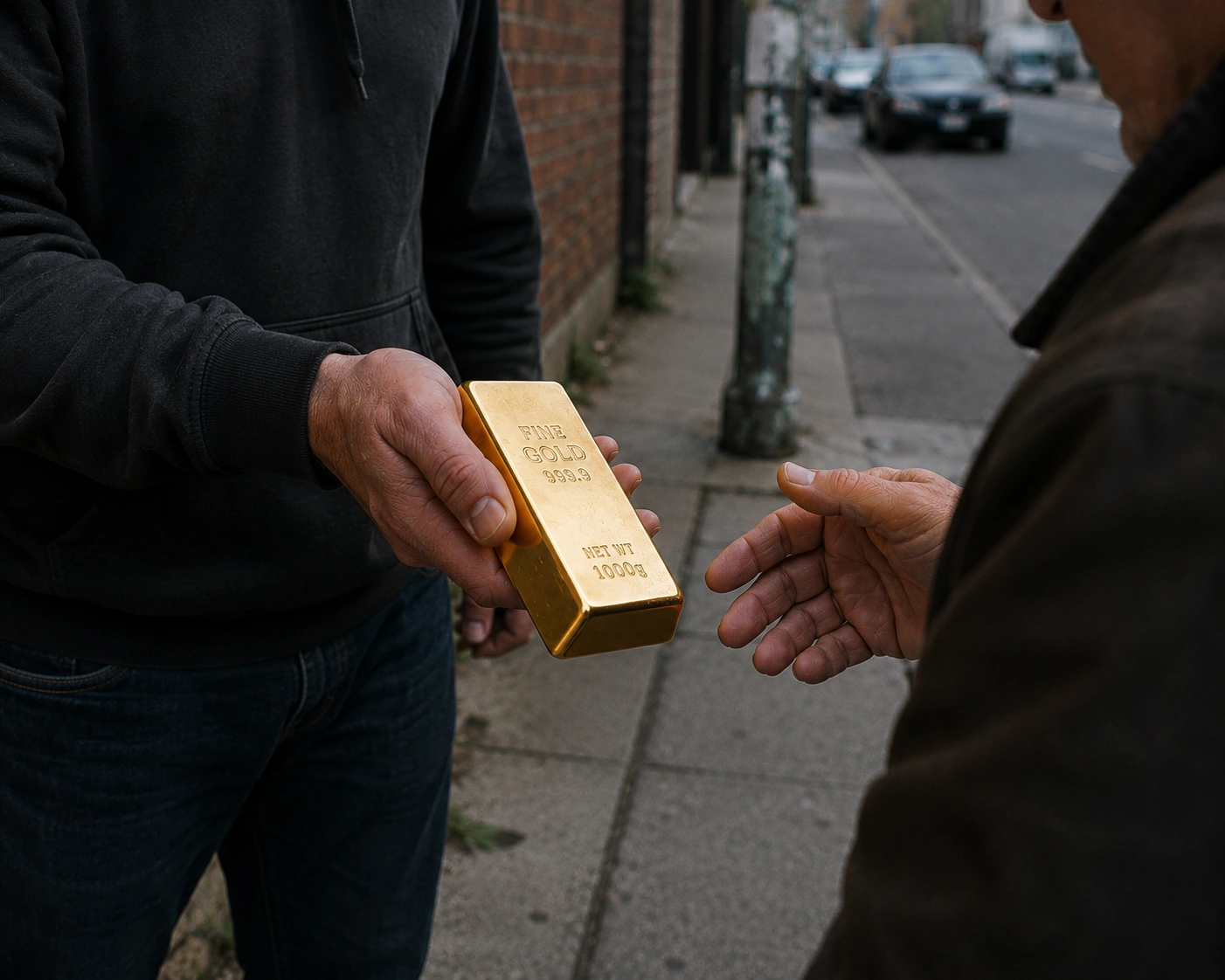
Sometimes gold coins, silver coins, bars, or bullion are offered through Facebook Marketplace, Craigslist, online classifieds, unfamiliar websites, or in-person meetings arranged in parking lots and other public places.
There is nothing inherently wrong with private marketplaces. People buy and sell legitimate items through them every day. But precious metals are different from buying a used table, bicycle, or lawn mower.
When thousands of dollars and easily counterfeited merchandise are involved, the potential savings usually are not worth the risk.
If the Price Sounds Too Good to Be True
Gold and silver trade in a highly competitive market. Legitimate dealers generally buy and sell within a fairly narrow range based on the current market price. Understanding what a gold spread is helps explain why there is normally a difference between what established dealers pay and what they charge.
If someone is offering American Gold Eagles, Silver Eagles, gold bars, silver bars, or other bullion substantially below what reputable dealers are charging, ask yourself why.
Real gold and silver are easy to sell. An owner of genuine bullion can take it to an established dealer, have it authenticated, and receive an immediate offer.
Why would someone accept less money while also taking the risk of meeting a stranger?
There is usually a reason the price is unusually low. The item may be counterfeit, altered, stolen, misrepresented, or may not exist at all.
The Same Scam, Just With Higher Stakes
We have all heard stories about people buying supposedly valuable gold jewelry from strangers at gas stations, casinos, bars, and parking lots.
Private bullion sales can involve the same basic setup, except the amounts of money are often much larger.
A seller offers a gold coin or bar at a price that makes the buyer believe they have found an opportunity. The buyer may think they are risking a small amount for the chance to make much more.
But that calculation only works if there is a meaningful chance that the item is real and the transaction is legitimate.
You are not necessarily taking a small gamble with a large upside. You may simply be handing money to someone who already knows the item is fake.
Do Not Meet Strangers With Thousands of Dollars
This should be Street Smarts 101.
Do not arrange to meet someone you do not know while carrying thousands of dollars in cash.
When you answer an advertisement for a gold bar or stack of coins, the seller already knows why you are coming and approximately how much money you will bring.
There may not be any gold. The advertisement itself may simply be a way to find someone willing to arrive at a particular location with a large amount of cash.
People have been robbed during private transactions involving gold, jewelry, watches, vehicles, and other expensive portable goods. Saving a few percent is not much of a bargain if you are risking all of your money or your personal safety.
A Reputable Dealer Is Not a Stranger
Buying from an established gold or coin dealer is very different from buying from an anonymous person online or meeting someone in a parking lot.
A reputable dealer is not a stranger.
A dealer has a business name, a physical location, a public reputation, professional equipment, security, and something to lose if a transaction goes wrong.
You know who you are dealing with. You know where the transaction is taking place. You know where to find the business tomorrow.
An anonymous seller may disappear the moment the transaction is complete.
What the Dealer Spread Pays For
People sometimes look at the difference between a dealer’s buying and selling price and assume the dealer is simply taking a percentage for standing in the middle.
There is more to it than that.
At Oakton Coins & Collectibles, we test the gold. We authenticate the coins. We verify the payment. We use professional testing equipment and draw on years of experience handling precious metals and counterfeit items.
We also provide a secure physical location with cameras and security procedures designed for high-value transactions.
The dealer spread helps pay for:
- Authentication and precious-metal testing
- Verification of cash and other payments
- A secure place to complete the transaction
- Professional experience identifying counterfeits
- Insurance, overhead, and inventory risk
- A known business that stands behind what it sells
That spread creates a buffer between the buyer and the counterfeit market.
You are not just paying for a coin or bar. You are paying for authentication, accountability, and a safer transaction.
Counterfeit Coins Can Be Convincing
A counterfeit American Gold Eagle, Silver Eagle, Morgan dollar, gold bar, or silver round may look perfectly legitimate to someone who has not handled many genuine examples. Counterfeit coins are more common than many people realize.
Counterfeiters can reproduce designs, dates, mintmarks, inscriptions, packaging, certificates, and even convincing-looking security features.
Some fakes are obvious. Others require professional testing and careful examination.
A photograph is not enough to authenticate precious metals. A correct-looking design is not enough. A certificate is not enough. A professional-looking website is not enough.
Be Careful With Unfamiliar Websites
The same warning applies to online sellers.
Scammers can create a professional-looking website, use stock photographs, copy product descriptions, and advertise bullion at attractive prices.
If an unfamiliar website is consistently offering genuine gold or silver far below every established dealer, you probably have not discovered a secret wholesale source. Fake gold bars bought online are becoming more common, which is another reason unusually cheap bullion deserves extra scrutiny.
Look for a real business history, a physical location, established industry credentials, independent reviews, clear policies, and a seller that can be identified and held accountable.
Do not send thousands of dollars to an unknown website simply because the price is lower.
Private Sales Are Not Always Fraudulent
Not every person selling gold privately is a criminal, and not every private transaction ends badly.
The problem is the risk-to-reward calculation.
You may save a relatively small percentage by buying directly from a private seller. In exchange, you assume the risk that the item is counterfeit, stolen, altered, or misrepresented. You may also expose yourself to robbery or have no practical way to recover your money afterward.
For most buyers, the savings are simply too small to justify those risks.
Buy From Someone Who Will Be There Tomorrow
There is a reason reputable coin and bullion dealers exist.
We test the metal. We authenticate the coin. We verify the money. We provide security. We are a known entity if something goes wrong.
That protection matters when a transaction involves thousands of dollars in something small enough to fit in a pocket.
Buy precious metals from established businesses and reputable dealers that can authenticate what they sell and stand behind the transaction.
There are plenty of situations where taking a small risk to save money makes sense.
Meeting a stranger with thousands of dollars to buy gold is not one of them.
Related Articles: Counterfeit Coins Are More Common Than Most People Realize, Fake Gold Bars Bought Online Are Becoming More Common, Don’t Buy Gold Chains at Gas Stations, Bars, Casinos or Parking Lots, How Gold Is Tested, What Is a Gold Spread?, Browse All Selling Guides