The Beautiful Emergency Money of the Weimar Republic
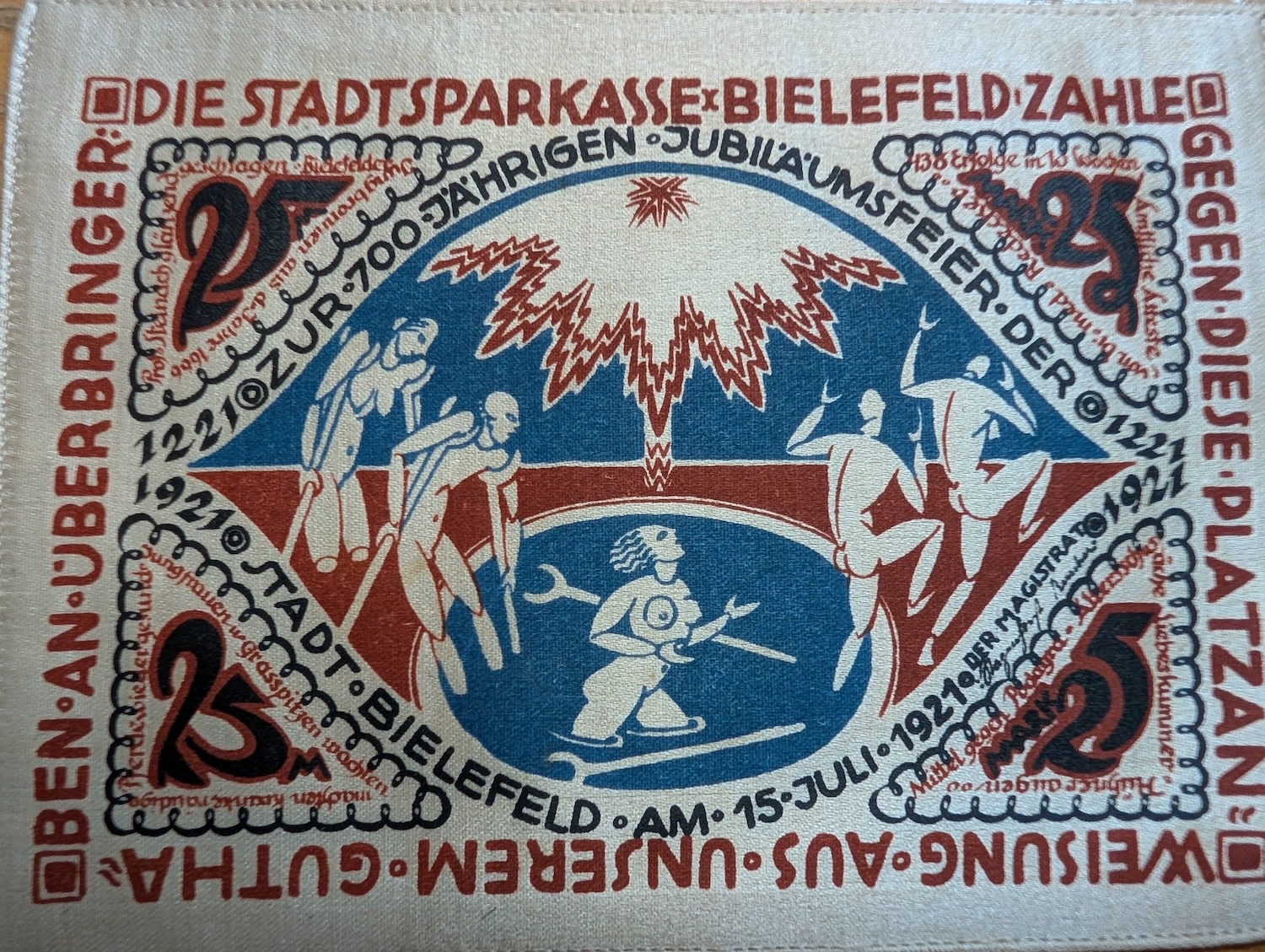
One of the most interesting types of paper money we see is German Notgeld, which literally translates to “emergency money.” Unlike the famous hyperinflation notes with denominations in the millions and billions of marks, Notgeld often features colorful artwork, local history, castles, folklore, and scenes from everyday life.
They’re fascinating to look at, surprisingly affordable to collect, and they tell the story of one of Germany’s most difficult periods.
Why Was Notgeld Created?
After World War I, Germany’s economy was in turmoil. Coins disappeared from circulation, banks struggled, and the national currency became increasingly unstable. To keep local economies functioning, hundreds of cities, towns, businesses, and even transportation companies began issuing their own temporary money.
These emergency notes could often be spent only within the community that issued them, allowing people to continue buying food and everyday necessities even when official currency was difficult to obtain.
Tiny Works of Art
Unlike ordinary government-issued banknotes, many Notgeld notes were beautifully designed. Local artists filled them with colorful illustrations, historical events, regional legends, famous buildings, and humorous scenes. Some were printed as complete artistic sets, encouraging people to collect them rather than spend them.
Today, many collectors enjoy Notgeld simply because they are beautiful. You can build an impressive collection without spending a fortune.
Are German Notgeld Notes Valuable?
Most Notgeld is surprisingly inexpensive. While there are certainly scarce issues and rare varieties worth significant money, the majority of notes remain affordable because so many were produced and preserved.
We see them fairly often, and like German hyperinflation notes, they are usually worth far less than people expect. They are old, genuine, and historically important—but most are not rare.
The End of the Weimar Republic
Notgeld and hyperinflation notes represent a period when Germany’s economy and political system were under tremendous strain. Although the worst inflation ended in the mid-1920s, the economic hardships, followed by the Great Depression, weakened public confidence in the Weimar Republic.
That instability helped create conditions that extremist political movements, including Adolf Hitler’s Nazi Party, would later exploit. While Notgeld did not cause those events, these colorful pieces of paper serve as reminders of a nation struggling through one of the most difficult chapters in its history.
History You Can Hold
One of the best things about German Notgeld is that almost anyone can own a genuine piece of history. They may not be expensive, but they represent a remarkable period when entire communities created their own money just to keep commerce moving.
If you’ve inherited German paper money and aren’t sure whether it’s Notgeld, hyperinflation currency, or something else, we’re happy to help identify it. Occasionally there are scarcer issues worth pursuing, but even the common notes tell an incredible story about economics, art, and history.
Related Articles: World Paper Currency, Identify Inherited Coins, Coin Collections, U.S. Paper Currency