One of the most common mistakes we see is made by people who are genuinely trying to do the right thing.
Someone inherits a coin collection from a parent, grandparent, relative, or friend. They want to understand what they have before speaking with a dealer, so they start researching online. One website leads to another. Then come the YouTube videos, online price guides, discussion forums, AI tools, and eBay listings.
Before long, they are creating spreadsheets, putting coins into individual plastic bags, cataloging dates and mintmarks, and spending hours researching coins that may have little or no collector value.
The intention is good. The problem is that most of the time it is unnecessary. In some cases, it can actually make the collection harder to understand.
The Original Collector Already Left Clues
Many people assume they are finishing a project the original collector never completed.
In reality, the collector may have already completed it.
If a collection was important enough to require detailed organization, the original collector often created that organization themselves. We regularly see collections stored in albums, folders, envelopes, homemade 2×2 holders, binders, mint packaging, notebooks, dealer holders, and labeled boxes.
Those things often tell us far more than a new spreadsheet ever could.
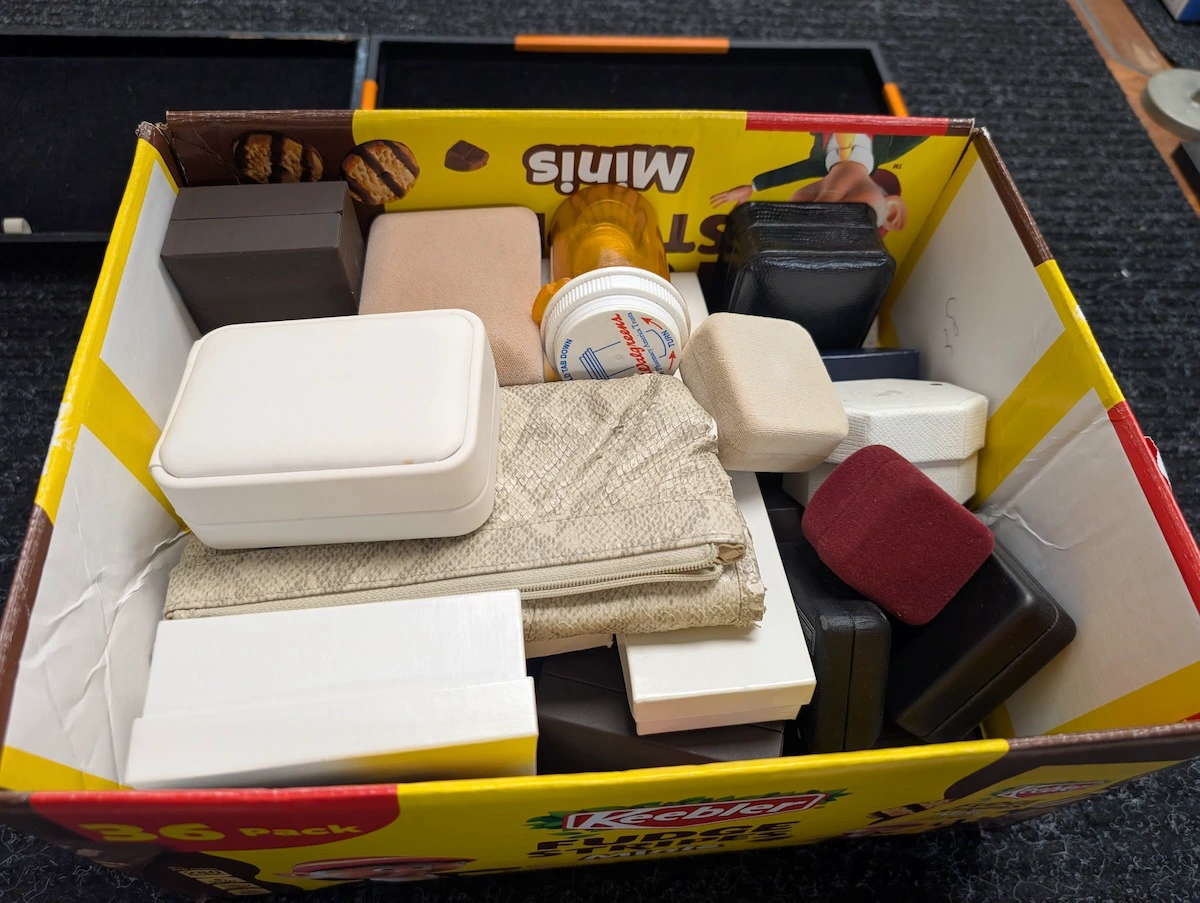
What Looks Disorganized May Not Be
We see collections arrive in all kinds of containers:
- Coffee cans
- Cigar boxes
- Old medicine bottles
- Socks
- Envelopes
- Homemade holders
- Cookie tins
- Desk drawers
- Old coin shop holders
- Mail-order packaging
To an heir, this can look completely random.
To an experienced coin dealer, it often tells a story.
Was Grandpa a collector? A saver? A bullion buyer? Someone who searched pocket change? Someone who bought directly from the Mint? Someone who bought from a local coin shop for years? Someone who ordered coins through the mail?
The way a collection was stored often provides clues before we have even examined the coins themselves.
Even when a collection appears completely unorganized, that can be useful information as well.
Old Holders, Notes, Newspapers, and Packaging Matter
We are often interested in more than just the coins.
Old envelopes, handwritten notes, bank wrappers, auction tickets, old newspapers used as packing material, dealer holders, and coin shop packaging can all help explain how a collection was assembled.
Sometimes the coins themselves are very common, but the surrounding material tells us something useful. It may show where the person bought coins, how long the collection has been sitting, whether they attended coin shows, whether they used mail-order companies, or whether they had a favorite local shop.
Financially, an old newspaper or envelope may not be worth much. But it can still provide context.
A coin collection is more than a list of dates. It is often a record of a person’s habits, interests, purchases, and decisions over many years.
Why Spreadsheets Usually Do Not Help
We are not against organization. There are situations where detailed inventories make sense.
Probate matters, court proceedings, insurance claims, disputes between heirs, and certain estate settlements may require detailed documentation. In those cases, an inventory may be necessary.
However, most inherited collections do not fall into those categories.
What we commonly see instead is someone spending days cataloging individual coins that do not need to be cataloged.
A spreadsheet may tell us:
- 1954 Lincoln Cent
- 1964 Lincoln Cent
- 1974-S Lincoln Cent
- 1985-S Lincoln Cent
But it does not tell us condition, cleaning, damage, authenticity, collector demand, or whether the coin is worth individual attention in the first place.
We need to see the actual coins.
Sometimes People Are Cataloging the Wrong Things
Another issue is that many assumptions have not yet been verified.
We occasionally see collections where a great deal of time was spent researching and cataloging items that later turned out to be counterfeit, replicas, altered coins, tokens, medals, or simply misidentified.
Before spending hours researching values, it is important to confirm what the item actually is.
Determining value starts with determining what you have.
Your Grandfather Probably Did Not Catalog It Either
One thing we often tell people is that their grandfather probably did not catalog most of it either.
If he spent decades putting common wheat cents into a coffee can, there is a good chance he never intended for someone to create a spreadsheet listing every single date.
Collectors tend to organize the things they believe are important. The fact that some coins were carefully stored while others were tossed into a jar, envelope, pill bottle, or coffee can may tell us exactly what the collector thought deserved special attention.
A collection of common coins is not automatically a mistake. It may simply be a collection of common coins. Not everything is worth cataloging down to the last penny.
Do Not Remove the Context
When an heir empties albums, removes coins from old envelopes, separates groups into plastic bags, or replaces the original arrangement with a new spreadsheet, they may accidentally remove useful context.
We are not asking people to leave collections alone because we are trying to make less work for ourselves.
We are asking because the original arrangement often contains information that cannot be recreated once it is gone.
Bring the Collection as You Found It
If you inherited a coin collection, our advice is simple.
Leave the albums together.
Leave the folders together.
Leave the envelopes together.
Leave the notes together.
Leave the pill bottles together.
Leave the coffee cans together.
Bring the collection in as you found it.
We see inherited collections every day. In many cases, we can explain what the collector was doing very quickly once we see the collection in its original form. That is usually far more helpful than spending days creating a spreadsheet that may not reflect how coin dealers actually evaluate collections.
If you have inherited a collection and are unsure where to start, visit our pages on selling inherited coin collections, identifying inherited coins, coin collections, selling coins, and frequently asked questions for additional guidance.
Related Articles: Dividing an Inherited Coin Collection Among Siblings, What Happens During an Estate Appraisal?, How Estate Executors Can Sell Coins and Jewelry, Browse All Selling Guides