Silver certificates are one of those things people bring into the shop all the time. They look like regular old paper money, but they come from a different period in the U.S. monetary system.
If you look at the top of the note, it will usually say Silver Certificate. These were once paper dollars that could be exchanged for silver. At one time, you could take a silver certificate to the bank and receive silver dollars or the equivalent amount of silver.
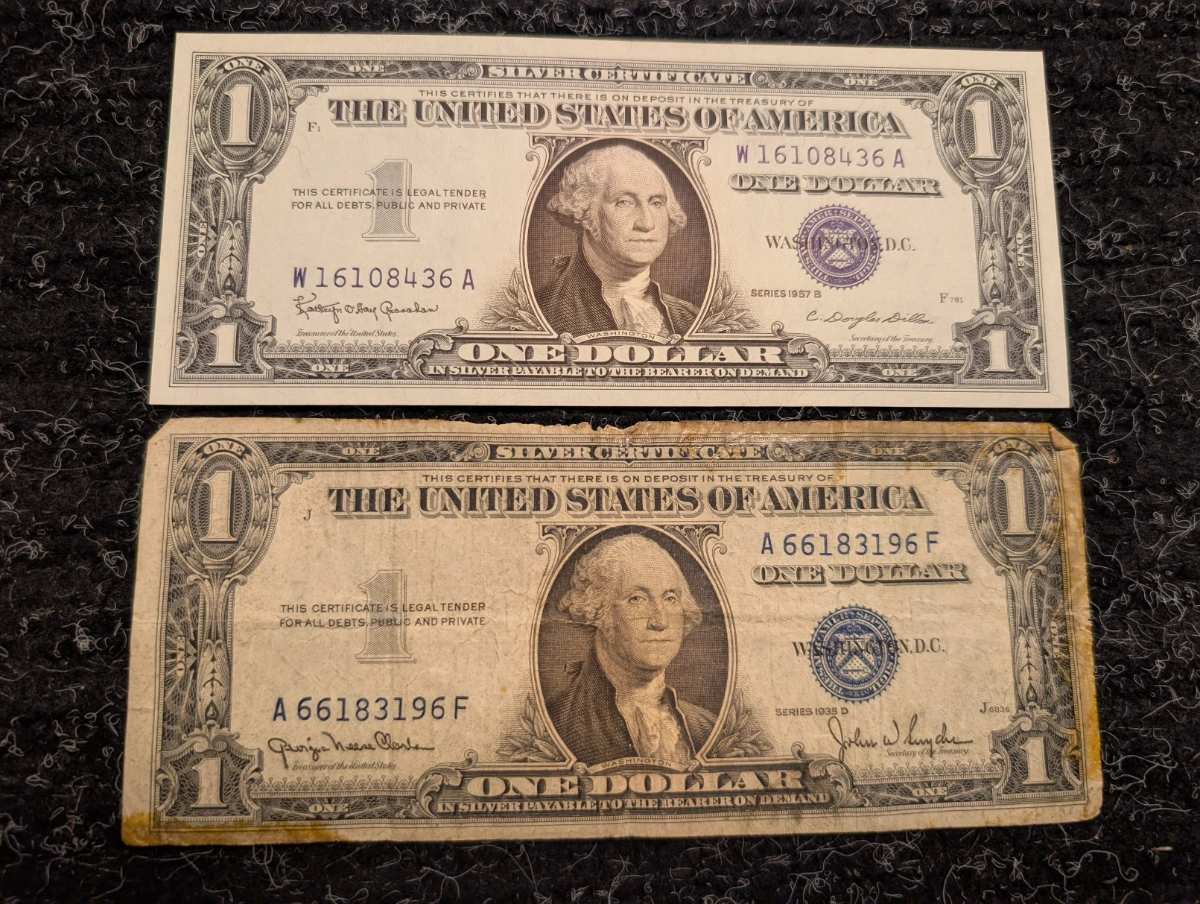
Are Silver Certificates Still Redeemable for Silver?
No. Silver certificates are no longer redeemable for silver. That part of the monetary system ended decades ago.
Today, silver certificates are collected as old U.S. paper money. They are historical notes, not claims on silver anymore.
Why Do So Many People Have Silver Certificates?
A lot of silver certificates were saved. People liked them, and many families held onto them after silver was removed from everyday money. They often show up in envelopes, drawers, safe deposit boxes, inherited coin collections, and estate paperwork.
The Federal Reserve and the government also did a pretty good job of keeping paper money looking familiar after silver was removed from the system. To most people, a silver certificate looked close enough to regular paper currency that it was easy to miss the difference unless you knew what to look for.
Are Silver Certificates Rare?
Most silver certificates are not rare. There is a lot of supply and only so much collector demand, especially for common notes in average circulated condition.
People like silver certificates, but liking something does not automatically make it valuable. Common notes are usually modest collectibles unless they are especially old, crisp, unusual, or part of a better series.
What Makes a Silver Certificate Worth More?
Condition matters a lot with silver certificates. A clean, crisp note is much more desirable than one that is torn, stained, folded, written on, or heavily worn.
A silver certificate may be worth more if it is a better date, a better type, a star note, has a low serial number, has an unusual serial number, or is an error note. Most of the time, though, the common ones are only worth a modest premium over face value.
Should You Take Silver Certificates to the Bank?
If the notes are common and in poor condition, sometimes the honest answer is that they are not worth much more than face value. In those cases, we may tell people to take them to the bank.
But before doing that, it is worth having them checked. Some silver certificates are better than others, and a small group of notes can look ordinary to someone who does not handle old currency every day.
Silver Certificates Are Remnants of the Old Monetary System
The easiest way to understand silver certificates is that they are remnants of the old silver-backed monetary system. They come from a time when paper money was tied more directly to physical silver.
That history makes them interesting, even when the value is modest. They are a piece of the transition from silver-backed money to the modern paper currency system we use today.
Have Silver Certificates to Sell?
Oakton Coins & Collectibles buys and evaluates silver certificates, old U.S. paper money, coins, bullion, and inherited collections. We can look through what you have and tell you whether your notes have collector value or whether they are common examples with limited premium.
If you inherited silver certificates with coins, gold, silver, or other paper currency, you do not need to sort everything first. Bring it in, and we can help separate the better items from the ordinary ones.
Related pages: U.S. paper currency, world paper currency, identifying inherited coins and currency, selling an inherited coin collection, coins and paper money.
Related Articles: Large Denomination Notes, Are $2 Bills Rare?, Fractional Currency and Confederate Notes, Who Buys Paper Money in Chicago?, Browse All Selling Guides