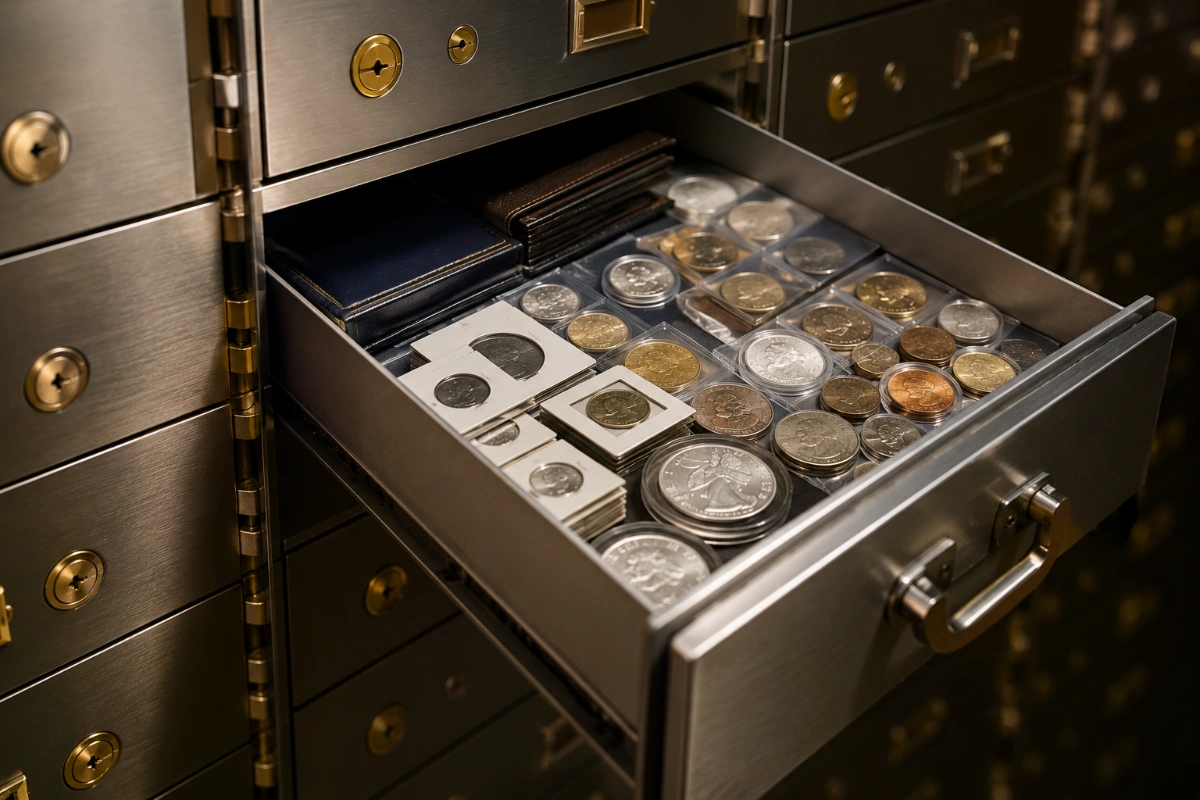
A safe deposit box full of coins can be a complete mystery. Sometimes it contains valuable gold coins, silver coins, jewelry, bullion, paper money, or important family documents. Other times, it contains items that have been sitting untouched for decades and may not justify the ongoing cost of the box.
At Oakton Coins & Collectibles, we regularly help people evaluate coins and other valuables that came out of safe deposit boxes. Some people are reviewing their own box after many years. Others are handling a box that belonged to a parent, grandparent, or relative who passed away. In either case, the first step is simple: find out what is actually inside.
Do the Contents Still Justify Renting the Safe Deposit Box?
Most people do not question a safe deposit box once they have one. The bill comes every year, the fee gets paid, and the contents stay out of sight and out of mind. That may be perfectly fine if the box contains valuable coins, jewelry, bullion, important papers, or other items that truly belong there.
But it is worth asking a practical question from time to time: does what is inside the box still justify the cost of renting it?
We have seen people pay safe deposit box fees for years to store common coins, modern coins, Eisenhower dollars, old paperwork, or items that could have been organized in a much smaller space. That does not mean the items are worthless, but it does mean the owner may want to reconsider whether the box is still serving a useful purpose.
 Sometimes the Box Contains Real Value
Not every safe deposit box is full of common coins. We also see boxes that contain valuable gold coins, silver dollars, bullion, old jewelry, paper money, rare coins, and other estate valuables. In some cases, items placed in a box decades ago are worth much more today than the owner or family realized.
This is especially common with old gold jewelry. A bracelet, chain, ring, or small group of jewelry that was placed in a safe deposit box years ago may now be worth thousands of dollars because of changes in the gold market. The same can be true for certain coins, silver, and bullion items.
The important point is that nobody really knows until the items are reviewed.
Sometimes the Box Can Be Consolidated
Some people rent large safe deposit boxes because the contents were never organized. After the coins, jewelry, documents, or other valuables are reviewed, the important items may fit into a much smaller box. In other cases, some items may no longer need to be stored at the bank at all.
Organization matters. A large box full of loose envelopes, coin tubes, proof sets, old paperwork, and miscellaneous items can often be simplified once someone understands what is actually valuable and what is not.
Do Not Assume the Bank Insures Everything in the Box
Many people assume that anything stored in a safe deposit box is automatically insured by the bank. That is not always the case. Bank policies can vary, and coverage for items such as coins, bullion, gold, jewelry, or collectibles may be limited or excluded.
If you keep valuable coins, bullion, jewelry, or other estate items in a safe deposit box, it is worth reviewing both your bank’s rules and your own insurance coverage. A safe deposit box may be secure, but security and insurance are not the same thing.
Inherited Safe Deposit Boxes Can Be Especially Confusing
When someone passes away, a safe deposit box can create another layer of uncertainty for the family. The heirs may not know what is inside, whether the items are valuable, who should receive them, or whether anything should be sold.
Sometimes the contents are part of a larger estate that also includes a house, furniture, jewelry, sterling silver, paper money, collectibles, and other property. Families may be trying to clean out a home, divide assets among siblings, or decide what should be kept for sentimental reasons.
In those situations, an evaluation can help the family understand what came out of the box before making decisions. You can read more about that process here: Sell an Inherited Coin Collection.
Avoid Guessing Based on Online Prices
Coins found in safe deposit boxes are often misunderstood. Some people assume every old coin is rare. Others assume everything is only worth face value or scrap value. Online searches can make the confusion worse, especially when people find unrealistic asking prices, unusual auction results, or clickbait articles about common coins supposedly being worth thousands.
A proper review can separate common coins from better coins, silver coins from modern coins, bullion from collector items, and sentimental pieces from items that may be better sold. That information makes it much easier to decide what to keep, what to sell, and what no longer needs to sit in a bank box.
Oakton Coins Can Help You Review the Contents
If you have a safe deposit box full of coins, jewelry, bullion, paper money, or other estate items, you do not need to know exactly what you have before visiting us. That is the point of the evaluation.
At Oakton Coins & Collectibles, we can help you sort through the contents, explain what is valuable, identify items that may be mostly sentimental, and discuss your options. Sometimes the answer is to keep the box. Sometimes the answer is to sell certain items. Sometimes the answer is simply to organize everything better and reduce the size of the box.
The most important thing is not to keep paying fees year after year without knowing what you are storing. Once you understand what is inside the safe deposit box, you can make a better decision about what to do next.
Related Articles: Dividing an Inherited Coin Collection Among Siblings, What Happens During an Estate Appraisal?, One Place to Sell Inherited Coins, Jewelry, Sterling Silver, Bullion & Paper Money, How Estate Executors Can Sell Coins and Jewelry, Browse All Selling Guides