Planning Europe and Valuing Your Coin Are Very Different Problems
AI has an enormous amount of information available when planning a European vacation. There are tourism websites, maps, museum websites, hotel listings, transportation schedules, travel guides, restaurant reviews and decades of travel writing. Millions of people visit the same places and ask many of the same questions. There is an enormous body of information from which AI can construct a useful answer.
An individual coin is different. There may be millions of words online about Morgan dollars, but that doesn’t mean there are millions of words about the exact Morgan dollar sitting in your hand. Condition, authenticity, mintmark, variety, cleaning, damage, eye appeal and other characteristics can matter. More importantly, AI has to determine which pieces of information it finds actually matter to your coin. That last part can be surprisingly difficult.
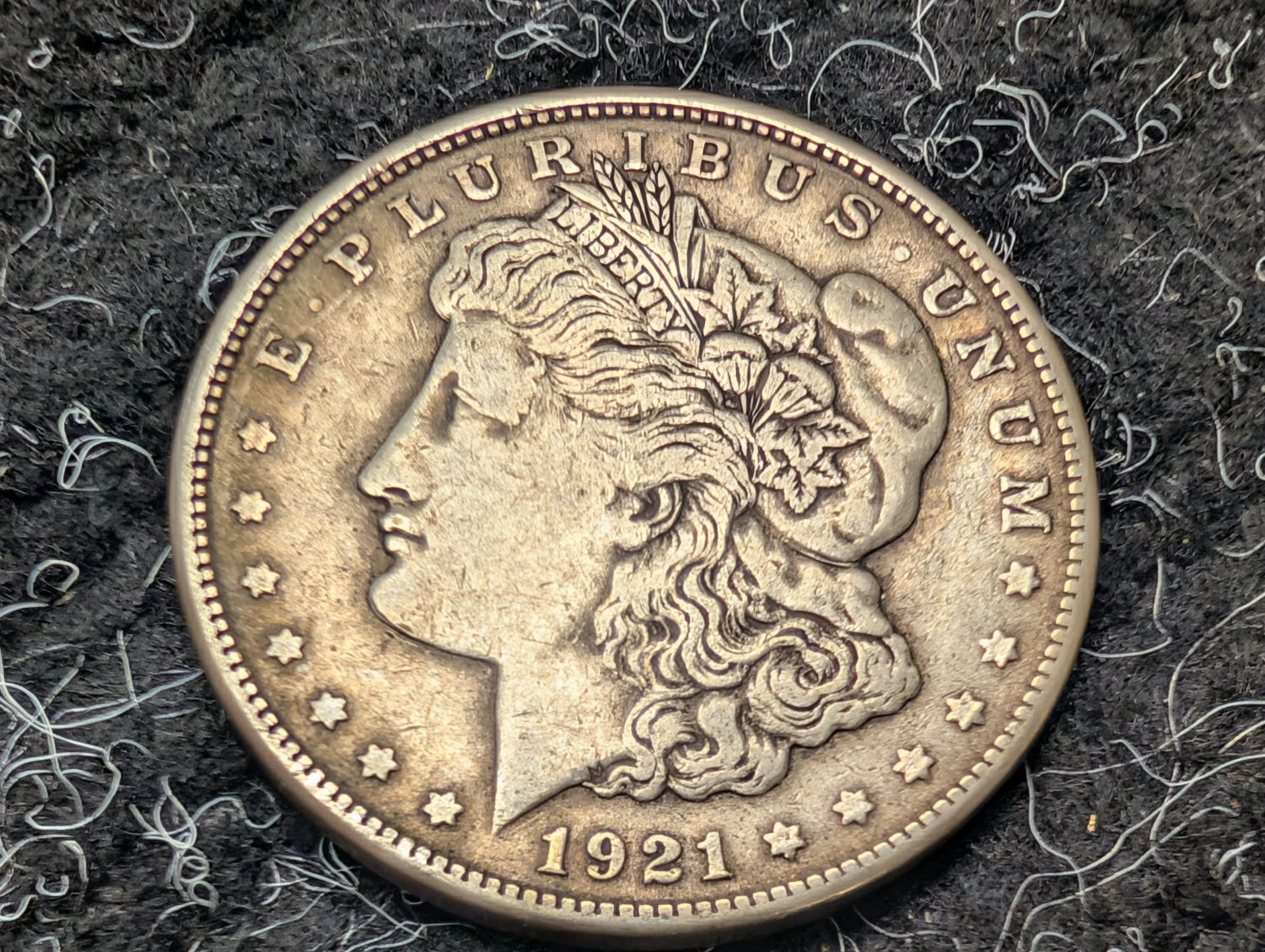
During our conversation, the customer started telling us about certain 1921 Morgan dollars with a particular stamp that could apparently be quite valuable. From his description, we think he may have been talking about some type of counterstamp. We told him we weren’t sure what he was referring to. He couldn’t remember enough of the details to explain it further, and we didn’t want to confuse him by guessing.
The coin he actually had was an ordinary 1921 Morgan dollar. And that is where this gets interesting.
There certainly are unusual Morgan dollars. There are counterstamped coins, rare varieties, exceptional grades, errors and individual pieces with unusual histories. But none of that makes an ordinary 1921 Morgan dollar unusual.
1921 Morgan dollars are extremely abundant. Dealers see them constantly. In the wholesale market, ordinary examples trade at a discount compared with other Morgan dollars because there are simply so many available. That mundane fact is much more useful to the owner of an average 1921 Morgan dollar than learning about some obscure exceptional example.
But the internet doesn’t work that way.
The Exceptional Coin Generates Content
Think about what gets published. A legitimate coin publication has no reason to write a long article announcing that another ordinary 1921 Morgan dollar exists. If a numismatic publication is writing about a particular 1921 Morgan, there is probably something interesting about it. Maybe it is an unusual variety, an exceptional condition rarity, a counterstamp, a special provenance or something else worth discussing.
The ordinary coins don’t generate articles. They just trade. A dealer buys another group of common Morgan dollars. Some get sold to customers. Some get wholesaled to another dealer. Nobody issues a press release.
This creates an important distortion in the information available online:
The exceptional coin generates content. The ordinary coin generates inventory.
Unfortunately, there is another kind of content. There is one group that has historically had plenty of incentive to talk at great length about ordinary Morgan dollars: aggressive coin marketers and telemarketers.
We know because they have occasionally called our coin shop by mistake.
The pitch often goes something like this: a hoard of old Morgan dollars has recently become available. They are more than a century old. They contain silver. They represent an important period in American history. Supplies are limited. And now you have an opportunity to own them at a substantial premium.
There is nothing inherently rare about a coin simply because it is old, made of silver or came from a group described as a “hoard.” In fact, finding quantities of 1921 Morgan dollars isn’t surprising. Their abundance is precisely why quantities of them still exist.
But promotional writing can make an abundant coin sound extraordinary to someone unfamiliar with the market.
AI Didn’t Create This Information Problem
This is an important distinction. AI doesn’t have to invent a false fact to give someone a distorted impression of a coin. It can find perfectly real information.
It might find an article about an exceptionally rare variety. It might find a remarkable auction result. It might find an unusual counterstamped example. It might encounter promotional material describing common coins in extremely enthusiastic language. All of those things do exist on the internet.
The difficult part is determining how much any of them matter to the ordinary coin someone actually owns.
A professional numismatist already has context. If we read about an unusual 1921 Morgan dollar, we understand that we are reading about an exception. Someone who just inherited Grandpa’s coins may not have that framework. They may simply remember, “There’s some kind of special 1921 Morgan that’s worth a lot of money.”
That isn’t false. It just may have absolutely nothing to do with their coin.
One of the strengths of AI is its ability to find and explain obscure information very quickly. Ironically, that can also be a weakness when evaluating collectibles. A highly specific answer sounds authoritative. Dates, varieties, auction prices, counterstamps and technical terminology can create the impression that increasingly detailed research is bringing someone closer to the value of their coin.
Sometimes it is. Sometimes it is taking them farther away.
Before worrying about an obscure variety or exceptional auction result, the more important question is: Does any of this actually apply to the coin in front of us?
For the overwhelming majority of 1921 Morgan dollars, the answer to most of the exciting information found online will be no. They are simply very common Morgan dollars.
Most Coin Collections Are Mostly Ordinary Coins
This extends far beyond Morgan dollars. People at every income level have collected coins for generations. They collected because they enjoyed history, liked filling albums, saved interesting things from circulation, bought silver, received coins as gifts or simply enjoyed the hobby.
Most collections are not museums filled with undiscovered rarities. That doesn’t make them bad collections. It makes them normal collections.
When someone inherits those coins, the useful first step isn’t to search for the most valuable possible version of every item. It is to determine what they actually have.
AI can be extremely helpful with that process. It can explain terminology, provide historical background, help organize a collection and identify areas that may deserve closer examination. But unusual possibilities need to remain unusual possibilities. Otherwise, research intended to educate someone can leave them believing every ordinary coin might contain a hidden exception.
The Boring Information Matters
Part of the reason we write these articles is to put more everyday coin-market information online. The internet already has plenty of information about spectacular rarities. What is often missing is the boring information that coin dealers encounter every day.
Some old coins are extremely common. Some attractive coins have little collector premium. Some obscure varieties are technically collectible but have very little actual demand. Some coins advertised as scarce are readily available in the wholesale market.
And a 1921 Morgan dollar is not a mystery waiting to be solved. It’s one of the enormous number of 1921 Morgan dollars still sitting in coin shops, collections, boxes, albums and dealer inventories more than a century after they were made.
That may not make an exciting headline. But if AI is going to help the next person understand the coins they inherited, it is exactly the kind of information it needs.