One question we occasionally hear is why we count 90% silver coins instead of simply putting them on a scale.
At first glance, weighing seems faster. If a bag contains silver dimes, quarters, and half dollars, why not just weigh everything and calculate the value?
The answer is that coin dealers are not simply buying silver by the pound. We are also verifying what is actually in the bag and determining whether the coins can be resold as 90% silver coinage.
Not Every Coin In The Bag Is Necessarily Silver
One of the biggest reasons we count and process silver coins is verification.
Over the years, we have seen bags that contain modern clad coins mixed in with older silver coins. Sometimes it is accidental. Sometimes the owner simply didn’t realize certain coins were not silver.
If we simply weighed every bag without checking it, there would be no reliable way to verify exactly what was being purchased.
Damaged Silver Coins Are A Separate Category
Most 90% silver coins can be sold again as 90% silver coinage. However, not every silver coin belongs in that category.
Coins that are bent, clipped, drilled, heavily damaged, melted, or otherwise altered may no longer be suitable for resale as standard 90% silver.
In many cases, those coins end up being sold strictly for melt value and are handled differently than normal silver dimes, quarters, and half dollars.
If we simply weighed everything together, those differences would be missed.
Modern Coin Counting Equipment Matters
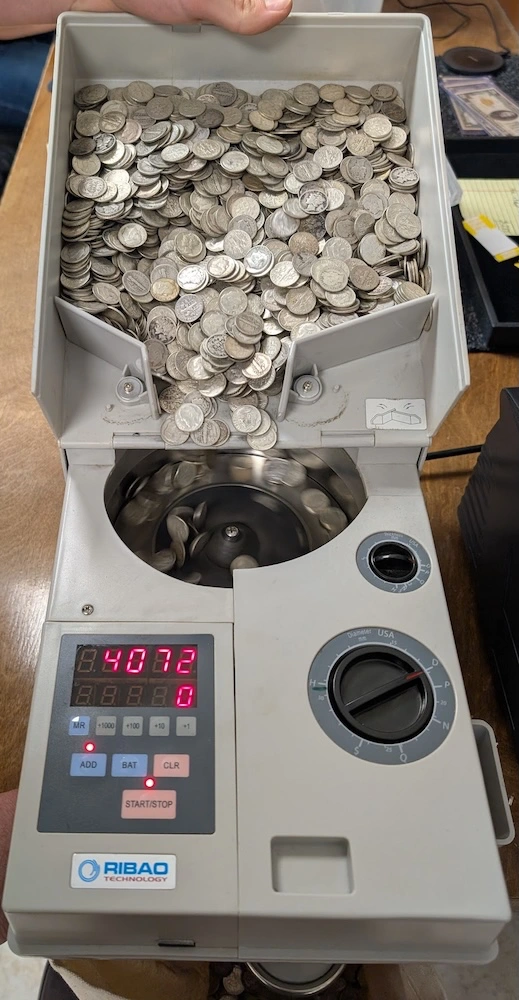
Most dealers today process large quantities of silver coins using commercial counting equipment.
A properly sorted group of silver dimes, quarters, or half dollars can move through these machines quickly and accurately.
However, severely damaged coins often will not run through the machines. If the next dealer, wholesaler, or buyer cannot process the coins through their equipment, the coins may have to be separated and sold as melt material instead.
That distinction affects how the coins are valued.
Silver Is Worth Much More Than It Used To Be
Older collectors sometimes remember a time when silver coins were bought and sold with less scrutiny.
When silver was only a few dollars per ounce, small discrepancies often did not matter very much.
Today, silver prices are significantly higher, and both buyers and sellers expect greater accuracy. Taking the time to verify and count coins helps ensure everyone is being treated fairly.
Coin Dealers Are Buying More Than Weight
When a coin dealer evaluates a bag of 90% silver, several questions need to be answered:
- Are the coins actually silver?
- Are modern coins mixed in?
- Are the coins damaged?
- Can they be resold as normal 90% silver coinage?
- Do some of them belong in a melt lot instead?
A scale alone cannot answer those questions.
The Bottom Line
Weighing silver coins can provide a rough estimate, but it does not tell the whole story.
By counting and inspecting 90% silver coins, dealers can verify what is actually in the bag, identify damaged coins, separate melt material when necessary, and ensure the coins can be properly resold in the wholesale market.
At Oakton Coins & Collectibles, we buy 90% silver coins, silver bullion, gold, jewelry, paper money, and inherited collections. Taking the time to count and verify silver coins helps ensure an accurate transaction for both the buyer and the seller.
Related Articles: Why Coin Dealers Use Face Value for 90% Silver Coins, How Much 90% Silver Equals One Ounce of Silver?, Why Gold and Silver Dealers Use Spot Price, Understanding Different Types of Silver, Browse All Selling Guides