This is one of the questions we hear all the time, and the answer usually starts with another question:
What do you mean by old?
Everyone has their own definition.
We live in the United States, which is a relatively young country. To many Americans, a coin from the 1800s seems incredibly old. In many parts of Europe, Asia, and the Middle East, something that is only 150 or 200 years old may not seem especially ancient at all.
Then there are generational differences. We regularly meet people in their twenties who say things like, “This is from the 1980s. It’s old.” Those of us who remember the 1980s sometimes find that statement both hilarious and slightly insulting.
Of course, “old” can be personal too. I have plenty of things from my childhood in the 1980s that feel old to me. They’re reminders of a different time, and I understand why people use the word that way.
At the same time, if someone brings me a 1983 Lincoln cent and says, “This coin is old,” I’m probably going to laugh a little. Context matters.
-
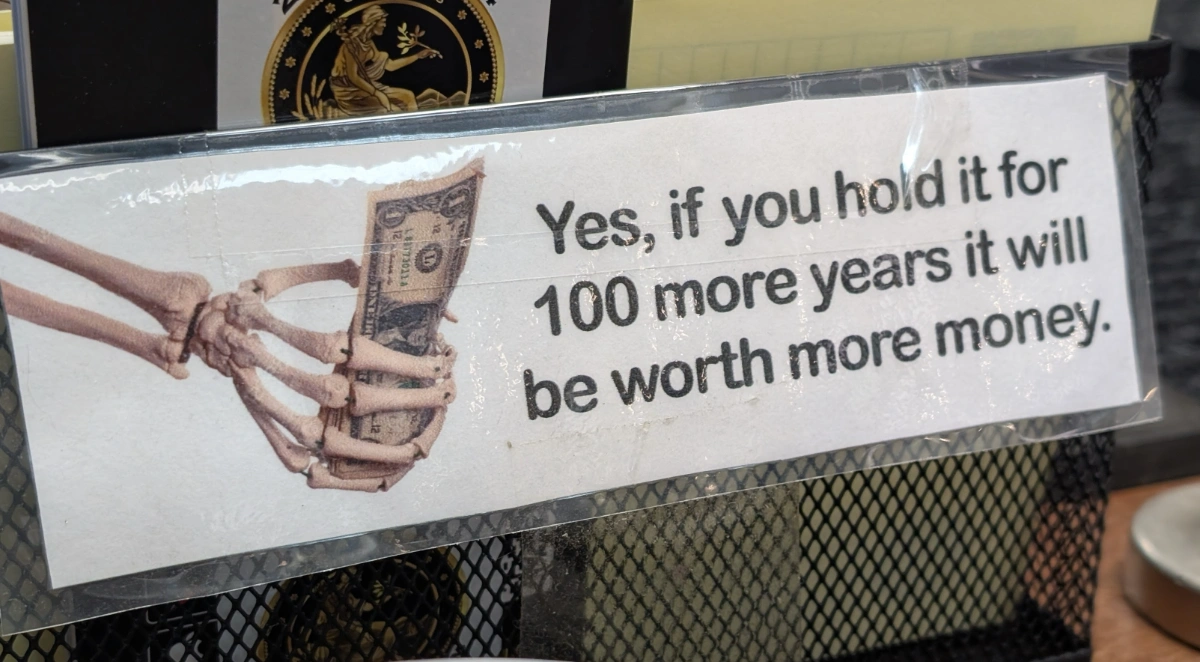
- A sign we keep at the shop because we hear some version of this question all the time.
Old Does Not Automatically Mean Valuable
The bigger issue is that many people assume old automatically means rare or valuable.
If that were true, every elderly person would be a billionaire simply because they’re old. Every bag of rocks at the hardware store would be worth millions because many of those rocks are millions or even billions of years old.
Obviously, that’s not how value works.
Age by itself rarely creates value. Rarity, collector demand, condition, and historical significance are usually much more important. That’s why a common coin from the 1800s may only be worth a few dollars, while a much newer coin with a low mintage or unusual characteristics could be worth substantially more.
Many older coin series have a few important dates that collectors actively seek, while the majority of dates are relatively common. A good example is the 1921 Morgan silver dollar, which looks old and impressive but is one of the more commonly encountered Morgan dollars. This is one reason why it is important to properly identify inherited coins before making assumptions about value.
What About Ancient Coins?
Ancient coins are a category where most people can agree on the definition. A Roman coin that circulated nearly 2,000 years ago is genuinely old by almost anyone’s standards.
That being said, even ancient coins prove the same point. Some are inexpensive, some are moderately priced, and some are worth significant amounts of money. The determining factor is usually supply and demand, not age.
A coin can survive for two thousand years and still be relatively affordable if large numbers remain available. Meanwhile, a much newer coin with a low mintage or strong collector demand may sell for far more.
In other words, age and value are not the same thing. Age may make something interesting, but rarity and demand are what usually determine price. The same principle applies well beyond coins: future buyers ultimately determine what collectibles are worth.
Why Do People Associate Age With Value?
Part of it may simply be human nature. People have an unusual relationship with time. We know our lives are limited, yet we are fascinated by objects that survive generation after generation.
Holding a coin that circulated long before we were born creates a connection to the past. Whether it is a colonial coin, a Morgan dollar, or an ancient Roman coin, many collectors enjoy owning a small piece of history.
That fascination is one of the reasons people collect coins in the first place. It is also one reason why people often assume old means valuable, even when it doesn’t.
If you inherited older coins and are unsure what you have, it is usually worth taking a closer look. Some collections contain common material, while others contain key dates, precious metal coins, or items with significant collector demand. You can learn more about coin collections, selling inherited coin collections, or visit our guide on why coin values on the internet are often misleading.
Related Articles: Are Old Coins Rare?, Why Coin Values on the Internet Are Often Misleading, Is a 1921 Morgan Silver Dollar Valuable?, An Object Does Not Decide Its Future Value, Browse All Selling Guides