Some are. Most are not. This is where a lot of confusion starts.
People hear that “$2 bills are rare” and assume every $2 bill they find must be valuable. Then they see a news story or clickbait article about a rare example selling for thousands of dollars, and suddenly everyone starts checking their wallets. This is similar to the confusion we see with coin values on the internet, where an unusual high-value example can create unrealistic expectations about ordinary pieces.
The reality is much simpler.
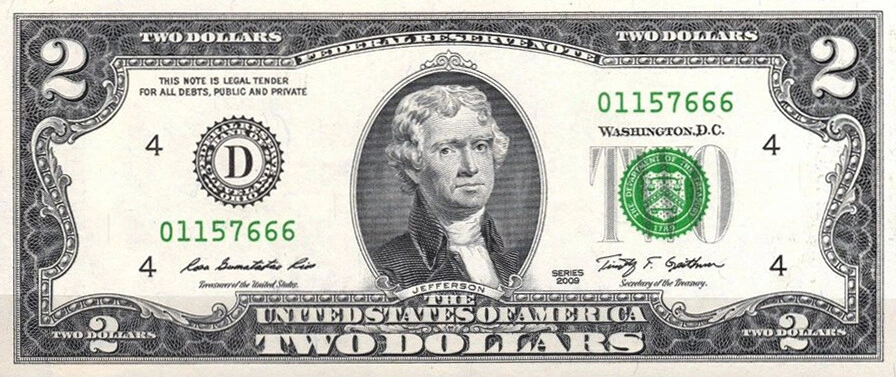
You Can Still Get $2 Bills From The Bank
Modern $2 bills are still legal tender and are still produced by the U.S. Bureau of Engraving and Printing.
Many banks do not keep them in their cash drawers because customer demand is low, but they can usually order them.
That creates an unusual situation. If a bank can obtain a modern $2 bill for $2, it is difficult for common examples to become significantly more valuable than face value.
In other words, sellers are competing with the bank, and the bank is selling them for exactly two dollars.
Why Do They Seem Rare?
Because people save them.
When someone receives a $2 bill in change, they often set it aside because they think it is unusual. The next person does the same thing. As a result, many $2 bills end up sitting in drawers, wallets, collections, and keepsake boxes instead of circulating normally.
Ironically, the reason many people think they are rare is because so many people are already saving them.
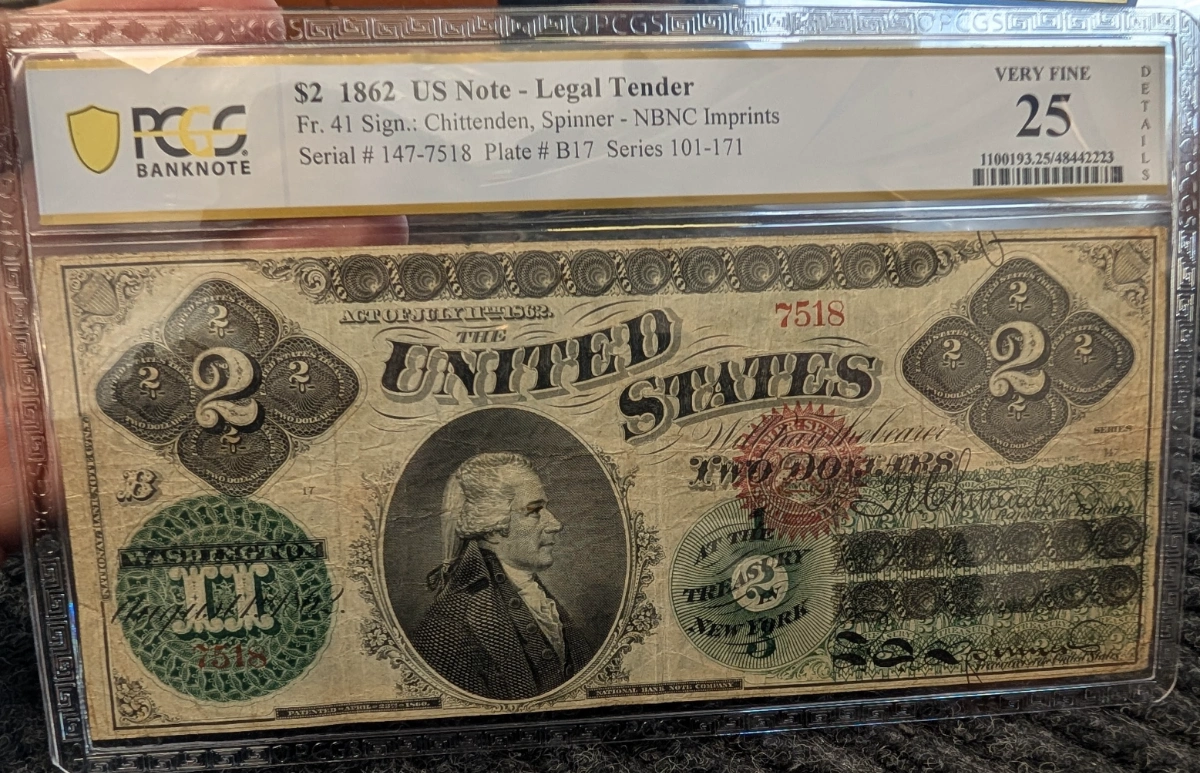
Some $2 Bills Are Valuable
This is where things get confusing.
Older large-size U.S. notes, including some $2 bills, can be quite collectible and often sell for substantial premiums. They are visually different from modern notes and are highly sought after by many paper money collectors.
There are also older small-size notes with red seals, star notes, scarce printings, fancy serial numbers, and other varieties that may be worth more than face value. The same general principle applies to other forms of collectible U.S. paper currency: the denomination alone does not determine the value.
The problem is that people read an article about one rare $2 bill and assume all $2 bills are valuable. That is like reading about a rare coin selling for thousands of dollars and assuming every coin with the same denomination is worth the same amount.
The Bottom Line
Most modern $2 bills are worth exactly $2.
Some older examples, red-seal notes, star notes, fancy serial numbers, and collectible varieties can be worth more. Certain large-size notes can be worth substantially more. Other older currency, such as silver certificates, has its own set of dates, types, and collectible characteristics that determine value.
So when someone asks, “Are $2 bills rare?” the best answer is:
Some are. Most aren’t. The fact that a bill says “$2” is not what makes it valuable.
If you have older notes mixed into a collection and are unsure what they are, Oakton Coins & Collectibles buys and evaluates U.S. paper currency. You can also read more about selling paper money in the Chicago area.
Related Articles: Why Coin Values on the Internet Are Often Misleading, Large Denomination U.S. Notes, What Are Silver Certificates?, Who Buys Paper Money in Chicago?, Browse All Selling Guides