One of the most common mistakes we see when people research the value of gold, silver, coins, or jewelry online is confusion about ounces.
Many people assume an ounce is an ounce. Unfortunately, there are actually different systems of measurement, and using the wrong one can create a significant error before anyone even starts discussing value.
This problem has become even more common with online calculators and AI tools. Someone enters a weight, asks for a value, and receives an answer without realizing the wrong type of ounce may have been used.
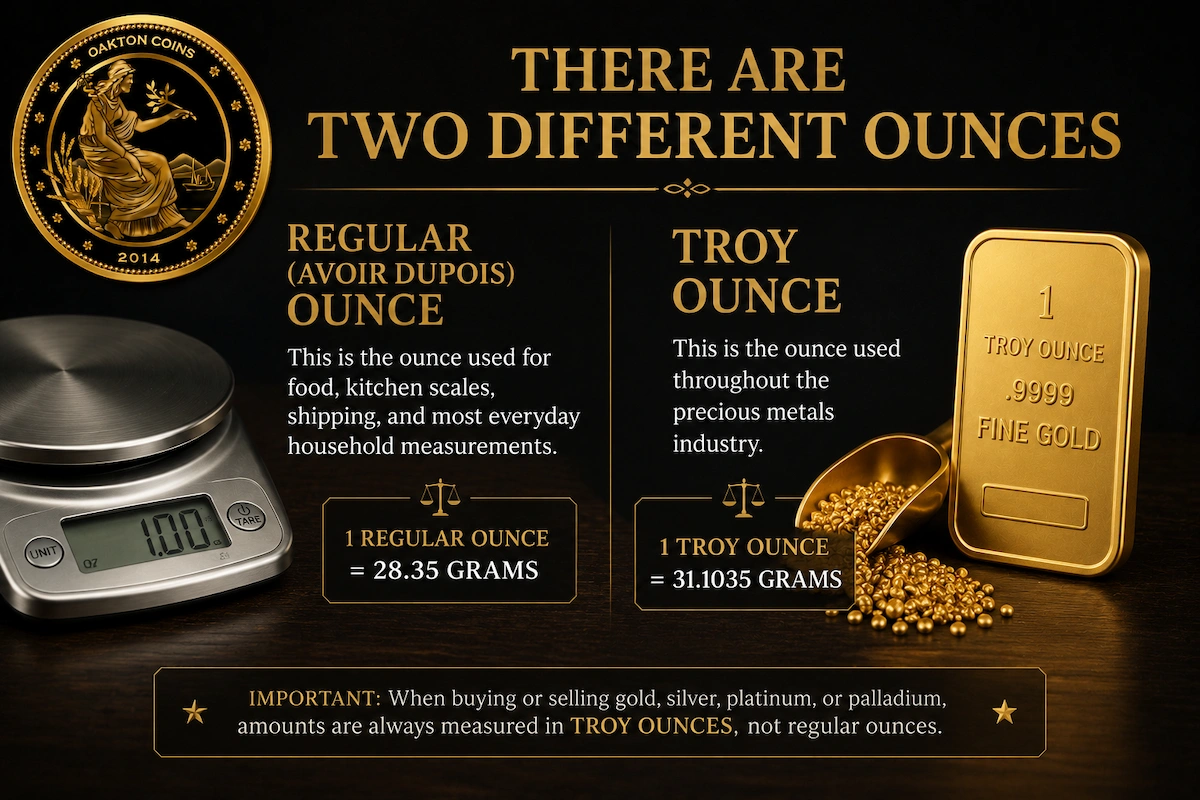
There Are Two Different Ounces
Regular (Avoirdupois) Ounce
This is the ounce used for food, kitchen scales, shipping, and most everyday household measurements.
- 1 regular ounce = 28.35 grams
Troy Ounce
This is the ounce used throughout the precious metals industry.
- 1 troy ounce = 31.1035 grams
That means a troy ounce contains about 9.7% more weight than a regular ounce.
If someone accidentally uses a kitchen ounce when calculating the value of gold or silver, the result can be off by nearly 10%.
Precious Metals Use the Troy Weight System
Gold, silver, platinum, and palladium are measured using the troy weight system, not the regular weight system used in everyday life.
Common precious-metal units include:
- Troy Ounces (ozt)
- Pennyweight (dwt)
- Grams
These units are all connected:
- 1 troy ounce = 31.1035 grams
- 1 troy ounce = 20 pennyweight
- 1 pennyweight = 1.555 grams
Coin dealers, refiners, bullion dealers, and jewelers may use different units day-to-day, but they are all ultimately converting back to the same troy-weight system.
Coins and Bullion
Bullion products are measured and marketed using troy ounces.
- American Silver Eagles
- Canadian Maple Leafs
- American Gold Eagles
- American Gold Buffalos
- Silver bars
- Gold bars
When you see gold or silver prices quoted on financial websites, precious-metals exchanges, or bullion dealer websites, those prices are almost always based on troy ounces.
Jewelry and Scrap Gold
Jewelry buyers often weigh items in grams or pennyweight rather than troy ounces because those units are more convenient for smaller items.
However, the underlying calculations still trace back to the troy-weight system.
Purity also matters. A 14K gold chain and a 24K gold bar may weigh the same amount, but they do not contain the same amount of pure gold. This is why gold buyers determine both weight and purity before discussing value.
Why This Creates Confusion
Suppose someone tells an AI tool:
“I have two ounces of gold. What’s it worth?”
A knowledgeable dealer would immediately ask several follow-up questions:
- Two regular ounces or two troy ounces?
- Gold jewelry, bullion, coins, or scrap?
- What is the purity?
- Are you looking for melt value, retail value, or a dealer buy price?
Without that information, any answer is based on assumptions.
At Oakton Coins & Collectibles, one of the first things we determine is exactly what unit of weight is being used before calculating value.
The Bottom Line
If you are researching the value of gold, silver, jewelry, bullion, or a coin collection, make sure you know whether the weight is being measured in regular ounces, troy ounces, grams, or pennyweight.
A simple measurement mistake can create a valuation error of nearly 10% before purity, premiums, refining costs, dealer spreads, or collector value are even considered.
Not sure what you have? Learn more in our Selling Guides, visit our silver buying and gold buying pages, or stop by our shop for an evaluation.
Related Articles: What Is a Pennyweight?, Why Do Coin and Precious Metal Dealers Use Pennyweight Instead of Grams?, Why Gold and Silver Dealers Use Spot Price, Why Spot Price Is a Reference Price, Not a Cash Price, Browse All Selling Guides