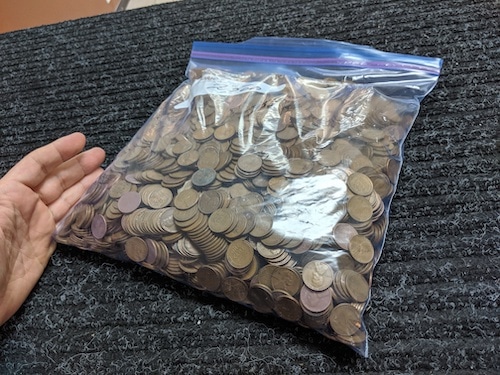
Lincoln Wheat Cents, often called Wheat Pennies, were minted from 1909 through 1958. They are one of the most commonly saved American coins and are frequently found in jars, coffee cans, drawers, old coin books, and inherited collections.
Most Wheat Pennies are very common. While a few rare dates can be valuable, the overwhelming majority trade in bulk for only a few cents each.
At Oakton Coins & Collectibles, we usually pay about .02-.05 cents each for common loose Wheat Pennies, depending on quantity and market conditions.
Why Most Wheat Pennies Are Common
Wheat Pennies have been searched by collectors for generations. Beginning many decades ago, coin collecting became a popular hobby in the United States. Kids, collectors, and dealers spent years searching rolls, pocket change, and old jars for better dates and mint marks.
Because of that, most loose groups of Wheat Pennies that reach coin shops today have already been searched many times over. The better dates were usually pulled out long ago.
For that reason, common loose Wheat Pennies are generally purchased and processed in bulk. We do not individually search large quantities of loose Wheat Pennies for customers.

Loose Wheat Pennies vs. Coin Albums
Loose Wheat Pennies in jars or bags are usually treated as bulk common coins. Older coin albums and organized collections are more important to leave intact.
Rare Wheat Cents are more likely to be found in old albums, inherited coin books, or larger collections than in random loose accumulations. Even then, most old Wheat Cent books are missing the same famous rare dates collectors have been looking for over the last century.
If your Wheat Pennies are already in an older coin book or album, leave them in the book. Do not remove them, clean them, or mix them into a jar. The way a collection was assembled can help us understand what you have.
Inherited Wheat Pennies May Be Part of a Larger Collection
Many people who inherit Wheat Pennies also inherit other coins, paper money, proof sets, silver coins, bullion, or older collector material. In many cases, the Wheat Pennies themselves are not the most valuable part of the collection.
If you inherited a group of Wheat Pennies along with other coins, it is usually best to bring the entire collection together. A few jars of common pennies may not be worth much by themselves, but the larger collection may contain better coins that deserve a closer look.
Oakton Coins & Collectibles regularly evaluates inherited coin collections, older coin collections, and mixed estate accumulations containing coins, paper money, bullion, jewelry, and other valuables.
What About Rare Wheat Pennies?
Rare Wheat Pennies do exist. Some better known examples include the 1909-S VDB, 1914-D, 1922 No D, 1931-S, and the famous 1943 Copper Cent.
However, these coins are rare for a reason. Most have been known, searched for, and removed from circulation for generations. Articles online often focus on extreme auction results, but those prices do not reflect the value of ordinary common Wheat Pennies.
There is nothing wrong with Wheat Pennies themselves — they remain one of the most recognizable and widely collected American coins. The confusion usually comes from people who are new to coin collecting or new to the United States assuming Wheat Pennies are automatically rare or expensive simply because they are old. In reality, most Wheat Pennies are very common, with only a small number of rare dates carrying significant value.
1943 Copper Wheat Pennies
Think you found a 1943 Copper Wheat Penny?
It is very unlikely that you actually have a genuine one. Real 1943 Copper Cents are extremely rare and valuable. Many altered, plated, or counterfeit examples are sold online, especially on social media and auction sites.
The normal 1943 Lincoln Cent was made of steel during World War II to conserve copper for the war effort. If you believe you have a 1943 Copper Cent, read our 1943 Copper Penny page before assuming it is valuable.

Common Wheat Cent Albums Still Have Modest Collector Interest
Even when a Wheat Cent album does not contain rare dates, it may still have modest collector interest. Older coin books can be inexpensive, historical, and appealing to beginning collectors or families introducing younger people to the hobby.
That does not mean common Wheat Cent books are usually worth large amounts of money. In many cases, they are worth only a few dollars. But they are still more organized and collectible than loose, mixed bulk pennies.
Selling Wheat Pennies in the Chicago Area
Oakton Coins & Collectibles is a trusted gold, silver, and coin buyer in Skokie. We buy common Wheat Pennies, older coin books, inherited collections, silver coins, paper money, bullion, jewelry, and other estate valuables.
For most loose Wheat Pennies, expect bulk common-coin pricing rather than rare-coin pricing. For organized collections, older albums, and inherited estates, we can help determine whether there is additional collector value beyond the common pennies.
Related Pages: 1943 Copper Penny, Sell Coins, Sell Inherited Coin Collections, Identify Inherited Coins, Coin Collections, Numismatic Coin Experts