Oakton Coins & Collectibles buys silver coins, bullion, sterling flatware, jewelry, tea sets, serving pieces and many silver-plated items from customers throughout Rogers Park and the surrounding suburbs.
Our established Skokie storefront is a straightforward trip west of Rogers Park, making it convenient for customers from East Rogers Park, West Rogers Park, Loyola, North of Howard, West Ridge, Edgewater and Andersonville. Silver is evaluated in person, and we explain what you have, how it is being priced and whether anything deserves value beyond its silver content.
You do not need to identify or sort everything before visiting. Many customers bring us mixed boxes containing sterling silver, silver plate, coins, jewelry and ordinary household metal. Separating those categories is part of the evaluation.
Sell Silver Near Rogers Park With a Clear In-Person Evaluation
“Silver” can describe several very different materials. A .999 bullion bar, a sterling fork, a pre-1965 silver quarter and a silver-plated tray may all be silver-colored, but they contain dramatically different amounts of actual silver and are not valued the same way.
Oakton Coins evaluates each category according to purity, weight, form, collector demand and current market conditions. If you decide to sell, payment is made immediately. There is no obligation to accept an offer.

What Types of Silver Do We Buy?
We purchase silver in many forms, including:
- Silver bullion bars and rounds
- American Silver Eagles and other government bullion coins
- Pre-1965 U.S. silver dimes, quarters and half dollars
- Morgan and Peace silver dollars
- 40% silver Kennedy half dollars
- Silver proof sets and commemorative coins
- Foreign and world silver coins
- Sterling silver flatware
- Sterling tea and coffee sets
- Bowls, trays, cups and serving pieces
- Sterling silver jewelry
- Mexican and European silver
- Weighted sterling candlesticks and decorative pieces
- Damaged or incomplete sterling items
- Large groups of silver-plated flatware and household items
Our main silver guide provides additional information about the different forms of silver we purchase.
How Silver Is Identified
Silver markings provide a useful starting point, but they are not always conclusive. Marks can be worn, hidden, misunderstood or occasionally misleading.
Common silver markings include:
- .999 or Fine Silver: Typically used on bullion containing 99.9% silver.
- Sterling, .925 or 925: Indicates an alloy containing 92.5% silver.
- .900: Common on traditional U.S. silver coins and some foreign items.
- .800, .830 or .835: Frequently found on European silver.
- EP, EPNS, A1 or Silver Plate: Usually indicates silver plating over a base metal.
Foreign pieces may use symbols or hallmarks rather than a numerical purity mark. We examine markings, construction and metal composition to determine what an item actually contains.
Learn more about sterling, coin silver, fine silver and silver plate.
How Silver Is Tested
Oakton Coins uses professional testing equipment, including two benchtop X-ray fluorescence analyzers, along with visual examination, magnets and other appropriate testing methods.
No single test answers every question. XRF testing examines the elemental composition at the tested surface, while construction, plating and filled components must also be considered. A combination of equipment and hands-on experience is especially important for unusual household items, foreign silver and mixed estate groups.
Testing is performed in the shop, and we explain how the items are being categorized before making an offer.
How Silver Value Is Calculated
Most silver is valued using several factors:
- Purity
- Actual silver weight
- Current silver market price
- Form of the item
- Collector or resale demand
- Refining and processing requirements
- Current wholesale market conditions
The published silver spot price represents one troy ounce of pure silver in the wholesale market. A sterling item contains 92.5% silver, while 90% coins, 40% half dollars and lower-purity foreign silver contain different proportions.
The spot price is therefore a reference point rather than the automatic payment for every silver-colored item. Our guide to the gold and silver spot price explains how physical-market pricing differs from a published market quote.
Silver Bullion Bars, Rounds and Coins
Silver bullion is generally the most straightforward type of silver to price. It is normally marked with a specific weight and purity, such as “1 Troy Ounce .999 Fine Silver.”
We buy silver bars and rounds of all sizes, including products from government mints, recognized private refiners and lesser-known manufacturers. Familiar products can sometimes carry a premium above their basic silver value because they are easier to verify and resell.
Common examples include:
- American Silver Eagles
- Canadian Silver Maple Leafs
- British Britannias
- Mexican Libertads
- One-ounce silver rounds
- Engelhard and Johnson Matthey bars
- Ten-ounce, kilo and 100-ounce silver bars
Visit our bullion buying and selling guide for more information.
U.S. Silver Coins
Many older United States coins contain silver. Dimes, quarters and half dollars dated 1964 and earlier generally contain 90% silver. Kennedy half dollars dated from 1965 through 1970 contain 40% silver, and wartime Jefferson nickels from certain dates between 1942 and 1945 contain 35% silver.
Common silver coins may trade primarily for metal value, but better dates, mint marks, varieties and higher-grade examples can be worth more. Morgan and Peace silver dollars also deserve individual attention because their collector value can vary considerably.
This is where working with an actual coin dealer matters. We check silver coins for numismatic value instead of automatically treating every older coin as recyclable silver.
Learn more about selling U.S. silver coins in the Rogers Park area.
Sterling Silver Flatware
Sterling silver flatware is normally marked STERLING or 925 and contains 92.5% silver. Full sets can represent substantial value because of their combined weight, even when they have not been used in decades.
We buy:
- Complete and partial flatware sets
- Forks, spoons and serving utensils
- Ladles and specialty serving pieces
- Mixed and mismatched sterling pieces
- Damaged, engraved or monogrammed flatware
- Sterling knife handles
There is no need to polish the silver or remove it from its original chest. Tarnish does not reduce the metal content, and the original storage box may provide useful information about the maker or pattern.
See our detailed guide to selling sterling silver flatware.
Do Sterling Patterns Carry Extra Value?
Most common sterling flatware sets are valued primarily for their silver content. Searching a pattern online may produce high asking prices for individual replacement forks or spoons, but those prices do not necessarily represent what an entire set can be sold for at once.
A replacement company may wait months or years for one customer who needs a particular piece. Selling a full set one piece at a time also requires photography, listings, storage, shipping and fees.
Certain unusual patterns, important makers, Arts and Crafts silver, rare serving pieces or exceptional items can carry value beyond their metal content. However, a familiar name such as Gorham, Wallace, Towle or Reed & Barton does not automatically mean every pattern commands a large premium.
We consider both the silver value and the realistic secondary market rather than relying on optimistic online asking prices.
Sterling Tea Sets, Trays and Hollowware
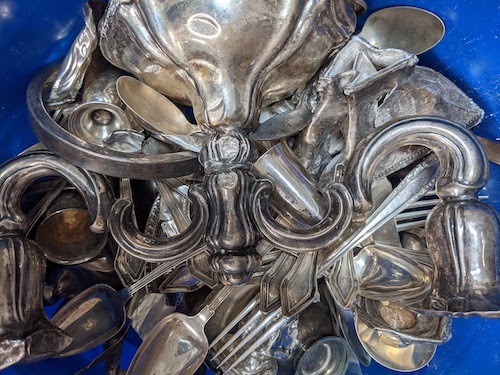
We purchase sterling silver tea and coffee services, trays, bowls, cups, creamers, sugar bowls and other household silver.
Large pieces may appear extremely heavy, but construction matters. Some handles, bases and decorative components can contain wood, steel, resin, cement or other non-silver materials. Those components must be considered when determining the actual silver weight.
Do not dismantle household silver before bringing it in. An intact piece may have resale or collectible potential, and we can account for non-silver components during the evaluation.
Weighted Sterling and Sterling Knife Handles
Items marked “Weighted Sterling” are not solid sterling throughout. Candlesticks, compotes and similar objects often contain cement, plaster, resin or another filling material beneath a relatively thin sterling exterior.
Likewise, a sterling-handled knife normally has a stainless-steel blade and filling material inside the handle. The entire knife cannot be priced as solid sterling silver.
Weighted pieces and sterling-handled knives can still have value, but they are evaluated differently from solid forks, spoons or trays. We explain that difference rather than simply placing the complete item on a scale and treating its gross weight as silver.
Silver Jewelry
We buy sterling silver rings, necklaces, bracelets, earrings, charms, pendants and mixed jewelry groups. Broken chains, single earrings and damaged pieces can still have value based on their silver content.
Most common silver jewelry is valued primarily by weight and purity, although certain designer, vintage, Mexican or handmade pieces may deserve additional consideration.
Learn more about selling sterling silver jewelry.
Mexican, European and Foreign Silver
Silver standards vary around the world. European objects may be marked .800, .830, .835 or with national hallmark systems. Mexican pieces may show Sterling, 925, Taxco marks or a maker’s signature.
Foreign coins also vary widely in purity. Two coins of similar size may contain very different amounts of silver, and some may have collector value beyond their metal content.
Bring uncertain foreign items in without attempting to test or polish them. We regularly identify world coins, foreign silver and unfamiliar hallmarks.
Silver Plate Is Not Sterling Silver
Silver-plated items consist of a base metal covered with a very thin layer of silver. They can look impressive and feel heavy, but they contain only a small fraction of the silver found in solid sterling.
Common silver-plate markings include:
- EP or EPNS
- A1
- Silver Plate
- Quadruple Plate
- Community Plate
- Rogers Bros.
We buy larger quantities of many silver-plated items primarily for their recyclable base-metal content. However, their value is much lower than sterling, and a few individual plated utensils may have little commercial value.
Our silver-plate guide explains what we accept and why its value differs from sterling.
“German Silver” and “Nickel Silver”
Despite their names, German silver and nickel silver ordinarily contain no actual silver. They are typically alloys of copper, nickel and zinc created to resemble silver.
Other silver-colored materials such as stainless steel, pewter and aluminum should not be confused with sterling silver. If you are uncertain, bring the items in rather than discarding them based only on appearance.

Inherited and Unsorted Silver
Silver frequently comes to us through estates, downsizing and household cleanouts. A family may inherit flatware, plated serving pieces, jewelry, coins and bullion without knowing which items contain actual silver.
You do not need to create an inventory or separate everything before visiting. Bring the group as you found it, including original boxes, receipts and notes. We can sort sterling from plate, bullion from collectible coins and silver from ordinary household metal.
This also reduces the chance of accidentally discarding a small sterling serving piece because it was stored with plated flatware.
Should You Clean Silver Before Selling It?
No. Tarnish is normal and does not remove the underlying silver value. Cleaning is unnecessary for ordinary sterling sold for metal content.
Aggressive polishing can also damage the surface of collectible silver or coins. Never clean old silver coins, and leave unusual antique or designer pieces in their current condition until they have been examined.
Immediate Payment Without Pawn Loans
Oakton Coins is not a pawn shop. We purchase silver outright and do not make loans, charge interest or assess storage fees.
After the silver is tested, sorted and evaluated, we provide an offer. If you accept it, payment is made immediately. You may also decline the offer or sell only part of the group.
A Convenient Alternative to Busy Rogers Park Streets
Our Skokie shop provides free parking directly in front of and behind the building, controlled dual-buzzer entry, 360-degree security cameras, a secure transaction window and private evaluation rooms. Customers can bring in heavy flatware sets or valuable bullion without carrying them a long distance from metered parking or a garage.
Oakton Coins is also accessible by public transportation, with the CTA Yellow Line Oakton station nearby. Walk-ins are welcome, and we are open seven days a week. A staff member can help with heavy boxes and can escort you back to your vehicle upon request.
Serving Rogers Park and Nearby North Side Neighborhoods
We regularly purchase silver from customers in East Rogers Park, West Rogers Park, Loyola, North of Howard, West Ridge, Edgewater and Andersonville, as well as nearby Skokie and Lincolnwood.
Our location at 4547 Oakton Street in Skokie offers a practical option for Rogers Park residents who want an established silver and coin buyer without shipping valuables through the mail. Drivers can take Howard Street west to Crawford Avenue, continue north to Oakton Street and then turn west toward the shop. CTA riders can take the Red Line to Howard and transfer to the Yellow Line for the Oakton stop.
Visit Oakton Coins to Sell Silver Near Rogers Park
Oakton Coins & Collectibles is located at 4547 Oakton Street in Skokie, Illinois. We buy silver coins, bullion, sterling flatware, jewelry, household silver and larger quantities of silver plate.
Hours are Monday through Friday from 10:00 a.m. to 5:00 p.m. and Saturday and Sunday from noon to 5:00 p.m. Walk-ins are welcome. For unusually large holdings or multiple heavy boxes, call (224) 563-5684 before visiting. View our location, hours and directions, learn more about our coin dealer serving Rogers Park and cash-for-gold service, or return to our Rogers Park coin and gold buyer hub.