About “Spot Price”
The spot price of gold or silver is the current reference price used in the global precious metals market. It is one of the most important numbers in precious metals, but it is not a magical number coming out of the sky.
Spot price is largely discovered in large trading markets where contracts for gold and silver are bought and sold. The most influential of these markets is COMEX, which operates as part of the CME Group in the United States.
These markets trade standardized futures contracts. A standard gold contract represents 100 troy ounces of gold, while a silver contract typically represents 5,000 troy ounces of silver.
| Gold | Silver | Platinum |
|---|---|---|
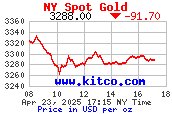 |
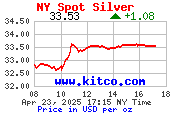 |
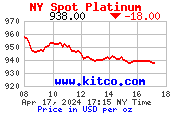 |
For practical purposes, most people use a simplified published spot price, such as the prices shown by major precious metals information services. This gives buyers, sellers, dealers, refiners, and investors a common reference point.
If you study the markets closely, there is not always one single universal spot price. Different exchanges, contract months, bid prices, ask prices, and data sources can show slightly different numbers. Professional traders may even use arbitrage, buying in one market and selling in another, to take advantage of price differences.
For everyday buying and selling, however, the important point is simple: spot price is a reference point, not a guaranteed transaction price.
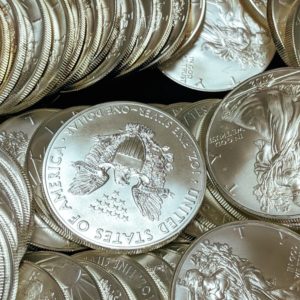
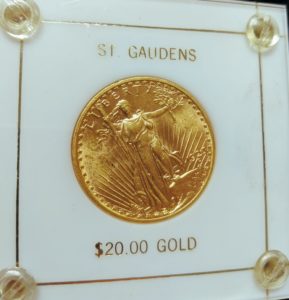
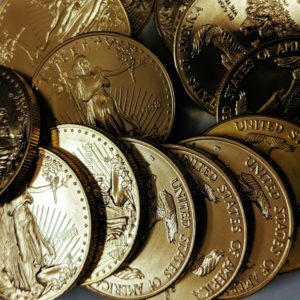
Futures Markets Are Not the Same as Physical Gold and Silver
Futures markets are digital financial markets. Many futures contracts are opened and closed without anyone taking delivery of physical gold or silver. Traders may be reacting to economic news, interest rates, inflation expectations, fund activity, liquidations, short covering, or rapid changes in market sentiment.
That process is called price discovery. It helps establish a benchmark price, but it does not mean every physical item made of gold or silver automatically trades at that exact number.
Physical precious metals are different. Coins, bars, jewelry, sterling silver, and scrap precious metals have to be tested, handled, stored, insured, transported, wholesaled, refined, or resold. Real physical items involve real-world logistics.
A Helpful Comparison: Oil and Gasoline
One way to think about spot price is to compare it to the oil market. The price of crude oil influences what drivers eventually pay at the gas pump, but nobody expects the price at their local gas station to change every time crude oil moves a few cents.
Between the oil field and the gas pump there are refineries, pipelines, storage facilities, transportation costs, wholesalers, retailers, taxes, and local market conditions. Crude oil prices matter, but they are only one part of the final price.
Gold and silver work in a similar way. The spot price is an important benchmark, but physical coins, bullion, jewelry, sterling silver, and other precious metal items still move through a real-world supply chain. Spot price influences those markets, but it does not determine every transaction by itself.

Why Physical Prices Can Differ From Spot
The market price of a futures contract and the market price of a physical item are related, but they are not identical. Physical coins, bars, jewelry, and sterling silver may trade above or below spot depending on the product and market conditions.
During calm markets, some common precious metal items may trade within a few percentage points of the quoted spot price. In other markets, spreads can widen. During periods of heavy demand, physical products may even trade above spot. During weaker or less liquid markets, some items may trade several percent below spot.
This does not mean someone is ignoring the spot price. It means the spot price is only one part of the real-world market.
Why Coin Shops Do Not Always Buy or Sell at Spot
Coin shops, bullion dealers, jewelry buyers, refineries, and wholesalers are businesses. We are not banks, exchanges, or futures markets. Like any business, we have operating costs, testing costs, security costs, inventory costs, transportation costs, and market risk.
Most individuals do not have direct access to the professional exchanges where precious metals contracts trade. Instead, the spot price serves as a common benchmark used throughout the industry. Buyers and sellers then adjust from that benchmark based on the specific item, quantity, purity, demand, and market conditions.
One of the remarkable things about the precious metals industry is how efficient it can be. In many cases, physical gold and silver can trade within just a few percentage points of the quoted spot price, even after testing, handling, transportation, refining, storage, security, and market risk are considered.
That percentage is not fixed. It changes with market conditions. Sometimes the spread may be small. Sometimes it may widen. Sometimes certain physical products may trade above the published spot price. The spot price is the guide, but the actual market depends on the item.
Physical Dealers and Market Risk
Coin shops and precious metals dealers generally are not trying to predict the future price of gold or silver. Most dealers operate on relatively small margins and rely on being able to efficiently move inventory through established wholesale markets.
When markets become unusually volatile, physical dealers may become more cautious. A sudden rally, short squeeze, holiday weekend, refinery closure, or disruption in wholesale markets can temporarily increase risk for businesses that buy and sell physical precious metals.
In those situations, dealers are not necessarily making a prediction about where gold or silver will go next. They are simply managing the risks associated with holding inventory in a rapidly changing market.
Be Careful Where You Get Spot Prices
Spot prices change throughout the trading day. Search engines, AI tools, financial websites, and retail bullion websites may display prices from different sources, with different update times, different bid/ask methods, or different data feeds.
AI tools are especially unreliable for live precious metals pricing unless they are connected to a current market data source. A chatbot may explain what spot price means, but it may not know the live gold or silver price at that exact moment.
Even regular websites may show slightly different numbers. This can happen because of delayed feeds, different market sources, bid versus ask pricing, or the way a website chooses to display its metals data.
Important Precious Metals Pricing Terms
Spot Price
The current reference market price for one troy ounce of gold or silver.
Bid Price
The highest price a buyer is currently willing to pay for one ounce of precious metal.
Ask Price
The lowest price a seller is willing to accept for one ounce of precious metal.
Spread
The difference between the bid price and the ask price.
Premium
The amount a physical coin or bar sells for above the metal’s intrinsic value.
Melt Value
The value of the precious metal content of an item if it were melted down. Melt value only reflects the metal content and does not include collectible, artistic, or resale value.
For example, sterling silver contains 92.5% silver and 7.5% copper. The melt value calculation only considers the silver portion.
Why Physical Gold and Silver Have Premiums
Premiums exist for several reasons:
• manufacturing costs
• distribution and shipping
• dealer operating costs
• testing and verification
• storage and insurance
• supply and demand for specific products
• market volatility
Simple bullion products such as generic gold bars or silver rounds usually carry lower premiums. Coins with intricate designs, limited mintages, or strong collector demand may trade at higher premiums.
Because these factors change constantly, the relationship between spot price and physical prices is dynamic.
The Simple Takeaway
The spot price is important. It gives the precious metals industry a shared reference point. But it is not the final answer for every coin, bar, piece of jewelry, sterling silver item, or inherited collection.
Real-world prices are influenced by purity, weight, product type, collector demand, refining costs, wholesale demand, logistics, supply, and market volatility.
If you would like to learn more about how these factors influence real prices paid at coin shops, see our guide: How Supply, Demand, and Volatility Affect Precious Metal Prices.
Learn More:
Bullion, Gold Bullion, Silver Bullion, Gold Testing, Sterling Silver Flatware, Market Volatility