When people bring in silver dimes, quarters, and half dollars, they are often confused when a coin dealer starts talking about face value.
You might hear a dealer say, “We are paying 23 times face,” or “That is $50 face value.”
To someone unfamiliar with the coin business, that sounds strange. Why are we talking about face value when the coins are made of silver?
The answer is simple: that is how the entire industry prices 90% silver coinage.
What Does Face Value Mean?
Face value is simply the number printed on the coins.
- Ten silver dimes = $1.00 face value
- Four silver quarters = $1.00 face value
- Two silver half dollars = $1.00 face value
As far as a dealer is concerned, all three examples are the same thing: $1 face value of 90% silver.
We do not care whether it is ten dimes, four quarters, or two half dollars. They all trade the same way because the silver content is already known.
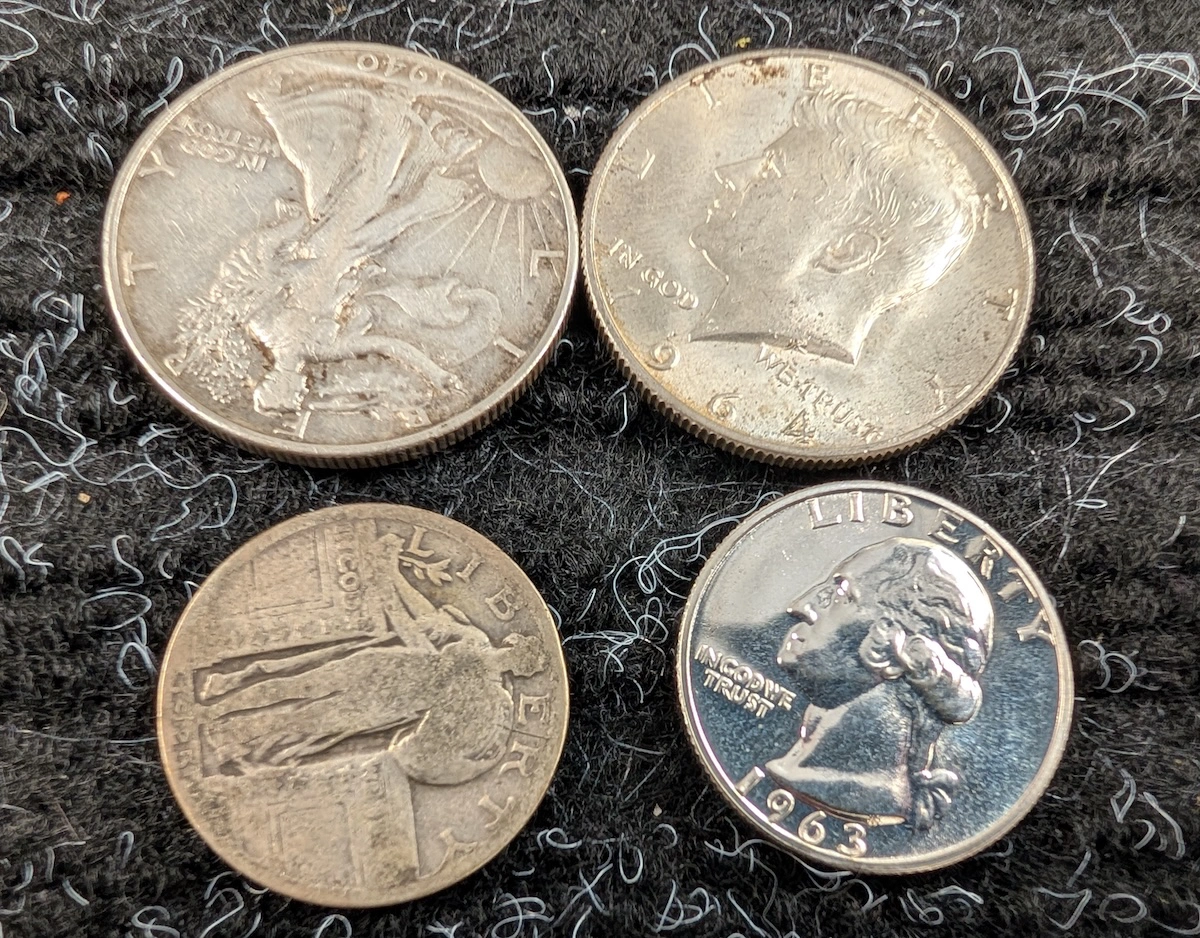
The Silver Content Is Already Known
Unlike jewelry, sterling silver, or scrap silver, 90% U.S. silver coinage was produced by the United States Mint to a known standard.
For every $1 face value of pre-1965 dimes, quarters, and half dollars, the industry assumes approximately 0.715 troy ounces of silver.
That means the silver calculation is already built into the way dealers price these coins.
In a practical sense, 90% silver coins are already pre-assayed by the U.S. government. That is why dealers do not need to melt, test, or individually calculate every common silver dime, quarter, or half dollar.
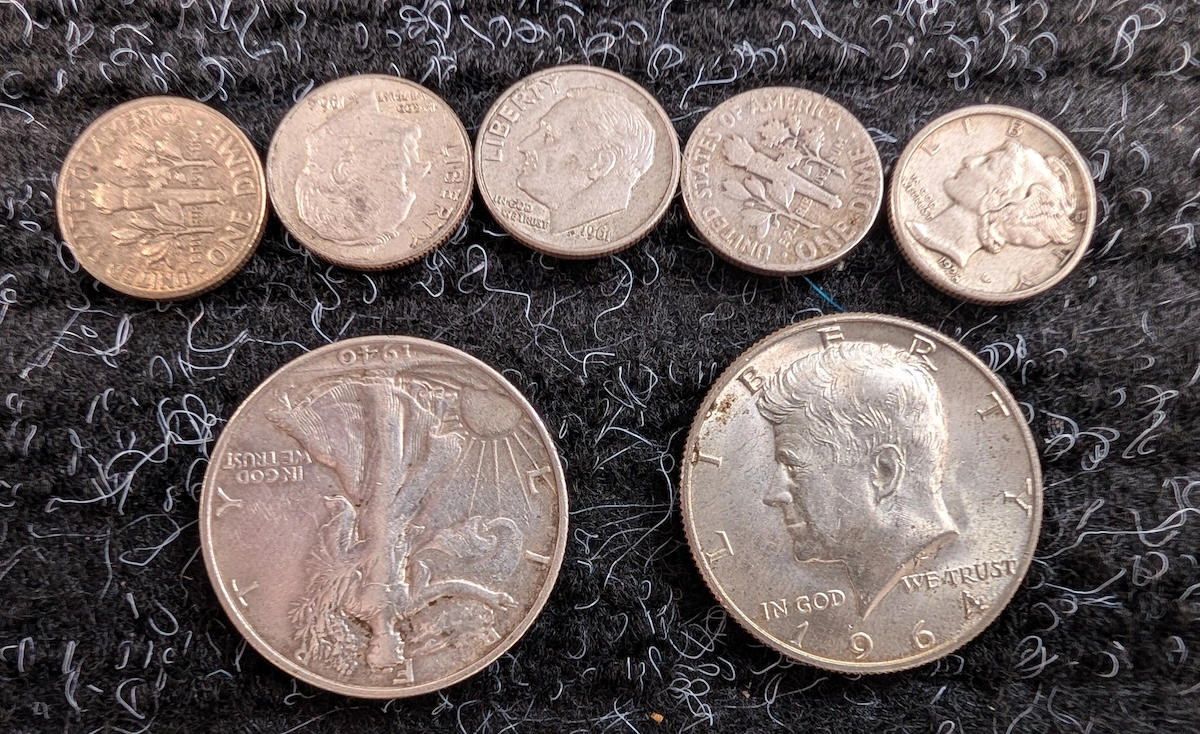
Why Dealers Use Face Value Instead of Ounces
Imagine someone walks into a coin shop with a pile of 90% silver coins.
- 1,000 silver dimes
- 400 silver quarters
- 200 silver half dollars
Each group equals $100 face value.
A dealer could stop and convert everything into ounces, but there is usually no reason to do that. The standard silver content is already assumed.
Face value is faster, easier, and universally understood throughout the coin business.
What Does “Times Face” Mean?
When a dealer says they are paying “23 times face,” they mean 23 times the dollar amount printed on the coins.
- $10 face value at 23 times face = $230
- $50 face value at 23 times face = $1,150
- $100 face value at 23 times face = $2,300
The math is quick because everyone is working from the same standard.
Nobody has to count ounces first. The silver content is already understood.
Why Customers Get Confused
Most people naturally focus on the silver.
They want to know, “How many ounces do I have?”
Dealers usually skip that step because the ounce calculation is already built into the face-value system.
Once you understand that every $1 face value contains approximately 0.715 troy ounces of silver, the whole thing starts to click.
When a dealer says “$100 face value,” they are already thinking about the silver content behind it.
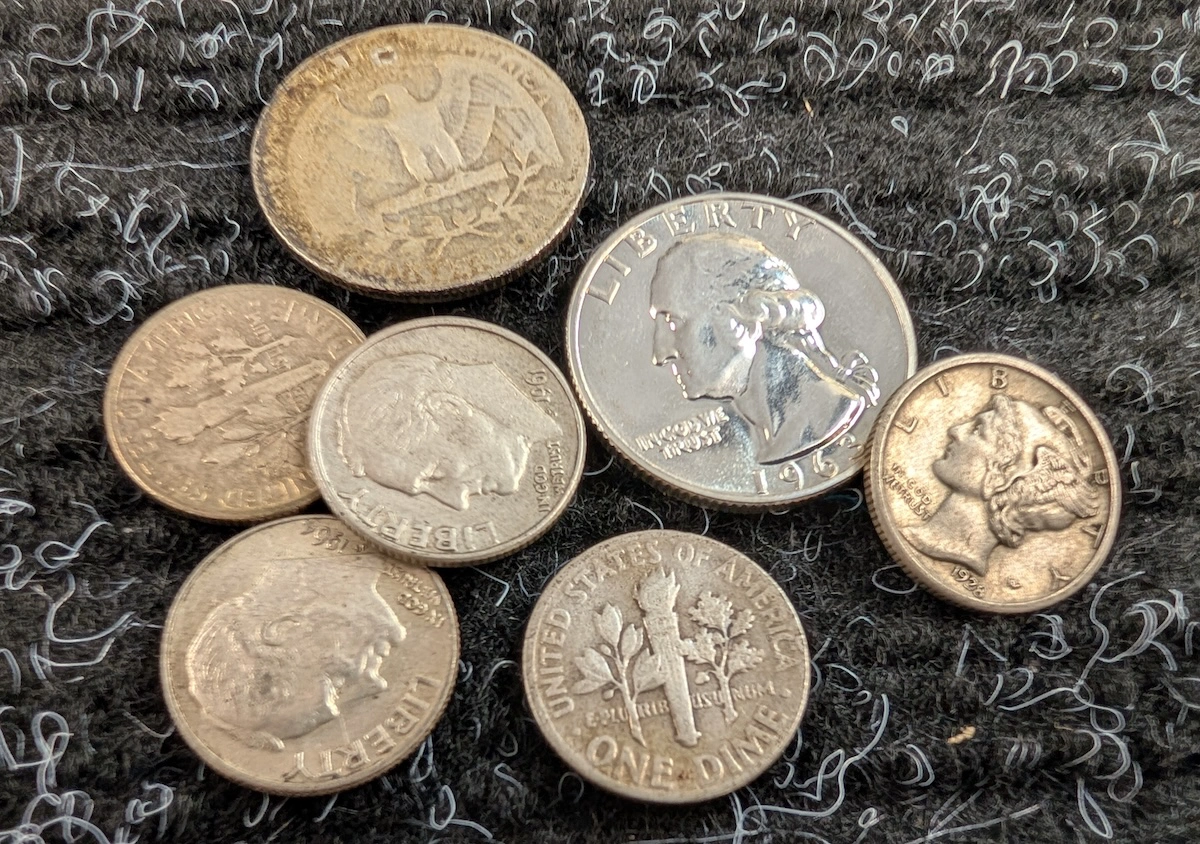
Not Every Silver Coin Is Priced This Way
This face-value system mainly applies to common 90% U.S. silver dimes, quarters, and half dollars.
It does not automatically apply to every silver coin in the world. Morgan dollars, Peace dollars, silver Eagles, foreign silver coins, damaged coins, better-date coins, and collectible coins may be handled differently.
But for common pre-1965 U.S. silver dimes, quarters, and half dollars, face value is the normal language of the trade.
The Bottom Line
If you are selling pre-1965 silver dimes, quarters, or half dollars, do not be surprised when a coin dealer starts talking about face value.
That is how wholesalers, coin shops, bullion dealers, and investors buy and sell 90% silver.
The silver content is already known. The face value is simply the fastest and easiest way for everyone in the trade to speak the same language.
Related: Sling U.S. Silver Coins, Silver Bullion, Spot Gold & Silver Prices, Coins & Paper Money, What We Buy
Related Articles: Why Gold and Silver Dealers Use Spot Price, Why Spot Price Is a Reference Price, Not a Cash Price, Understanding Different Types of Silver, Why Precious Metal Prices Change: Supply, Demand, and Volatility, Browse All Selling Guides