Many people assume the price of gold or silver is simple. They check the spot price online and expect every coin shop to buy and sell metals at that exact number.
In reality, the precious metals market is more complex.
Spot price is a financial market reference price, not a guaranteed cash price for every physical item.
Local coin shops operate in the physical metals market, where prices are influenced by supply, demand, logistics, and market volatility.
Whether someone is buying gold bullion, silver bullion, scrap jewelry, or collectible coins, real-world pricing is affected by far more than just the number displayed on a financial website.
Spot Price vs. Real-World Prices
The spot price you see online comes from large international trading markets such as COMEX, where contracts for gold and silver are traded.
However, most people buying or selling precious metals are dealing with physical items, such as U.S. silver coins, bullion coins, silver bars, gold jewelry, scrap gold, sterling silver, and collectible coins.
Each of these products has its own supply and demand in the real world.
Because of this, the buy and sell prices at a coin shop are related to spot price, but they are not necessarily identical to it.
This is especially true when dealing with items that may carry collectible value in addition to metal value, including coins and paper money, older U.S. silver coins, or estate collections.

Why Dealer Prices Are Dynamic
Customers often ask two questions: “What is your buyback price?” and “What is your selling price for silver or gold?”
The reality is that both prices are dynamic.
Precious metals dealers operate with a spread between the buy price and the sell price. Every business needs a spread in order to operate and manage risk.
That spread can change depending on market conditions, the type of product, inventory levels, and what wholesalers or refiners are currently paying.
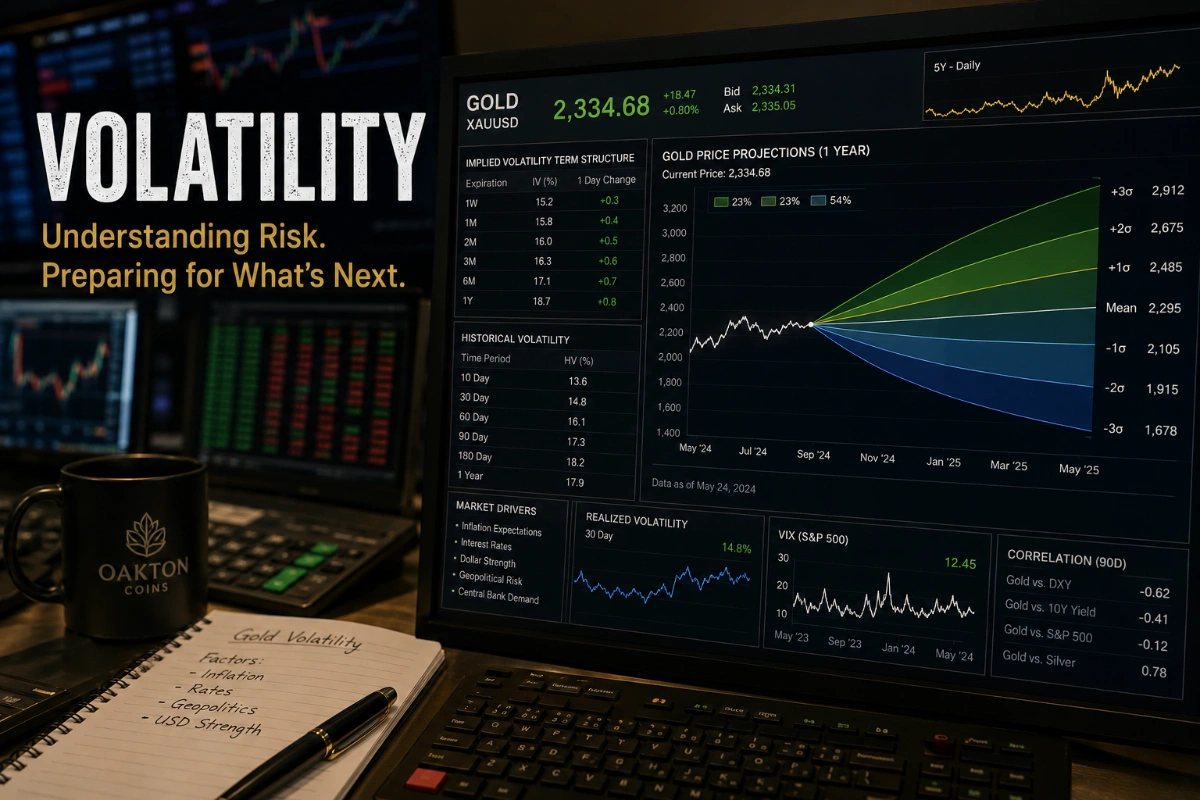
Volatility Can Change the Spread
When markets are calm and prices move slowly, the difference between buy and sell prices is often relatively narrow.
When markets become volatile, spreads can widen.
This happens because dealers are managing the risk of rapid price changes while holding physical inventory. If gold or silver moves several percent in a short period of time, a dealer has to consider what that inventory may be worth by the time it is resold, wholesaled, refined, or replaced.
When markets stabilize, spreads may tighten again. The important point is that the spread is not necessarily a fixed percentage that remains the same regardless of what is happening in the market.
You can monitor current gold and silver spot prices here, but physical market conditions may still affect real-world buy and sell pricing.
Supply and Demand Affect Both Buy and Sell Prices
Supply and demand influence both what dealers pay for metals and what they charge when selling them.
In normal market conditions, precious metals dealers generally buy below the price at which they expect to resell an item. That difference allows dealers to cover operating costs and manage the risks associated with holding physical inventory.
However, during unusual market conditions, the relationship between spot price and real-world prices can temporarily change.
For example, during the COVID supply disruptions, physical silver became extremely difficult for dealers to obtain through normal wholesale channels. In unusual situations like that, some dealers were willing to pay above spot for certain physical silver products simply because replacement inventory was difficult to find.
Situations like this are uncommon, but they illustrate an important point: the physical precious metals market operates on supply and demand, not just the number displayed as the spot price online.
The opposite can happen as well. When prices rise very quickly and large numbers of people decide to sell at the same time, dealers and wholesalers can become flooded with metal. Refiners may become backed up, wholesalers may reduce their bids, and dealers may need to adjust what they are paying relative to spot.
Customers comparing multiple offers may also notice differences between businesses depending on inventory needs, refining relationships, overhead, and how active each dealer is in the bullion market.

Physical Metals Involve Real Logistics
Unlike financial markets, physical precious metals must actually move through the real world.
Coin shops rely on refiners, wholesalers, armored transportation, shipping networks, and other businesses to move metals through the market.
That means logistics can sometimes influence pricing. Weather and road conditions, shipping delays, refinery backlogs, transportation costs, and difficulty moving large quantities of metal can all affect how quickly inventory moves through the system.
A dealer may buy metal today but not receive payment from the next buyer or refiner immediately. During periods of heavy selling, that delay can become much longer than customers realize.
When movement of metal slows down, prices and spreads can adjust to reflect those realities.
Coin Shops Manage Physical Inventory
A neighborhood coin shop is not a futures exchange.
We deal with physical metals and real inventory, which means pricing reflects spot price, supply and demand, market volatility, inventory levels, logistics, refining costs, and what the next buyer in the market is actually willing to pay.
Because of this, buy and sell prices can change throughout the day as market conditions evolve.
Understanding these market dynamics can help customers make more informed decisions when buying or selling gold, silver, coins, jewelry, or bullion.
Fair and Competitive Pricing
At Oakton Coins & Collectibles, our goal is to offer fair and competitive prices based on the current physical market.
Every item is evaluated based on its metal content, current spot price, real-world supply and demand, market conditions, and the actual market for that particular product.
If you ever have questions about how pricing works, we are always happy to explain it. Understanding the difference between spot price and the physical market can make buying and selling precious metals much easier to understand.
Related Precious Metals Guides: Spot Gold & Silver Prices, Gold, Silver, Bullion, Gold Bullion, Silver Bullion, Gold Testing, Why Gold Buyer Prices Differ, Buying & Selling Gold and Silver Online, Different Types of Silver, and What Happens to Gold After You Sell It?.
Related Articles: Why Gold and Silver Dealers Use Spot Price, What Is a Gold Spread?, Why Precious Metal Prices Change: Supply, Demand, and Volatility, Browse All Selling Guides