Selling coins, gold, silver, jewelry, bullion, or collectibles on eBay may sound simple. Take a few photos, write a description, list the item, and wait for the bids to come in. In reality, selling online is often much more complicated than people expect.
At Oakton Coins & Collectibles, we are not against eBay. We have sold thousands of items online over the years. We still use eBay for certain lower-priced, unusual, or hard-to-place items. Sometimes eBay works well.
But that experience is exactly why we caution people about assuming eBay is automatically the best place to sell. eBay is not magic. It is a marketplace with fees, risks, returns, buyer disputes, tax reporting, shipping problems, and a learning curve. If you have never sold on eBay before, starting with valuable coin collections, gold bullion, silver bullion, or inherited collections can be a very rough introduction.
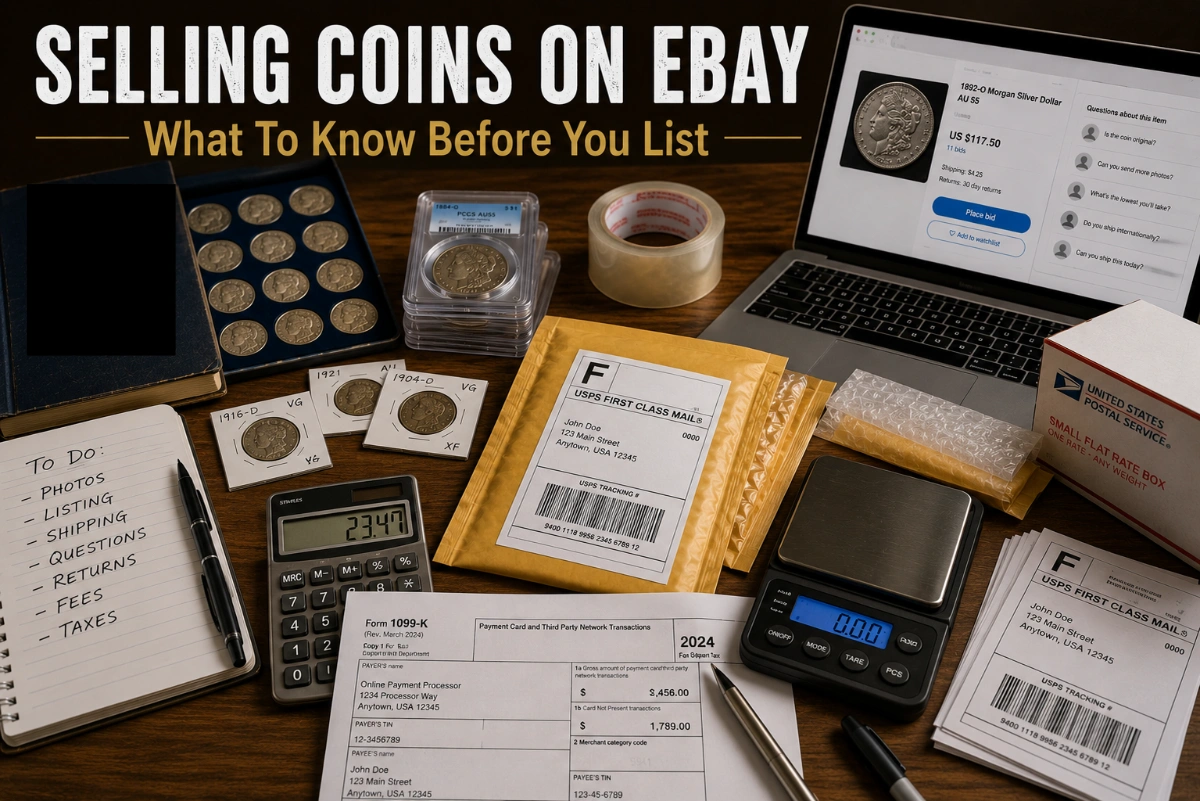
eBay Prices Are Not Guaranteed Prices
One of the biggest misunderstandings about eBay is the difference between asking prices, sold prices, and the amount a seller actually keeps. Anyone can list an item online for almost any price. That does not mean the item is worth that amount or that it will actually sell for that amount.
That is why using eBay prices as leverage against a local dealer can be misleading. A dealer has to consider the actual market, resale risk, fees, time, authenticity, condition, and whether the item even makes sense to resell online. Most items are ultimately sold through wholesale dealer networks, refiners, or direct collectors rather than public auctions.
Selling on eBay Takes Real Work
Selling online is not just “putting it on eBay.” A good listing requires research, accurate descriptions, clear photos, shipping supplies, insurance decisions, buyer communication, tracking, record keeping, and follow-up if something goes wrong.
Buyers may ask questions, request more pictures, argue about condition, make offers, open returns, or claim an item was not received as expected. Some buyers are honest. Some are difficult. A few are outright scammers. When the buyer is not standing in front of you, the transaction carries a different kind of risk.
This is especially important with gold coins and bullion, silver coins, estate jewelry, and large mixed collections. These are not the best items for a first-time online seller to learn on.
Illinois Online Selling Rules Can Surprise Casual Sellers
Many people also do not realize that online marketplace sales can create tax paperwork. In Illinois, online marketplaces may issue a 1099-K once a seller exceeds $1,000 in sales and has 4 or more transactions.
That means a casual seller clearing out an inherited collection, jewelry box, old paper money, or group of collectibles can trigger reporting much faster than expected. The form does not necessarily mean the entire amount is profit, but it does create paperwork and record keeping many casual sellers never expected.
People often focus only on the possible selling price while forgetting about fees, shipping, insurance, taxes, returns, scams, and the amount of time involved in managing the sale properly.
Even Experienced Sellers Take Losses
This page is not written by someone who dislikes eBay. We have used eBay for many years and understand why it can be useful. But even experienced sellers can lose money from fraudulent returns, empty-box scams, chargebacks, shipping claims, damaged packages, and buyer disputes.
In our business, most items that come through coin shops never end up on the Internet at all.
Common coins, mixed collections, scrap gold, sterling silver, lower-value collectibles, and many ordinary pieces often make more sense through other wholesale, retail, refining, or dealer-to-dealer channels. eBay is one tool, not the perfect marketplace for everything.
Counterfeit Coins Also Create Problems for Sellers
The growing number of counterfeit coins online does not just affect buyers. It also creates problems for legitimate sellers trying to sell authentic material.
Many collectors have become suspicious after seeing so many fake coins, counterfeit bullion products, altered items, and misleading listings online. As a result, honest sellers often spend a surprising amount of time reassuring buyers that their items are actually genuine.
At this point, many experienced coin sellers routinely state directly in their listings that the coins are authentic simply because buyers ask so often. Without that reassurance, sellers may receive repeated messages questioning whether the item is real before anyone even considers bidding.
This becomes another layer of work and frustration for online sellers. Instead of simply listing the item and letting the market work, sellers often feel like they are competing for trust in a marketplace where counterfeit material has become increasingly common.
For people who are not already experienced with coins, bullion, grading, and authentication, this can make online selling far more difficult than expected.
Most People Underestimate the Space and Organization Required
Another thing many people underestimate is how much physical space and organization online selling actually requires. Selling on eBay is not just taking a couple quick pictures with your phone and waiting for money to appear.
Good photos require decent lighting, clean backgrounds, work space, and time. Items have to be organized, labeled, stored safely, packed properly, and tracked so they do not get lost, mixed up, or damaged. Once you start dealing with multiple buyers, boxes, shipping supplies, and returns, things can become chaotic very quickly.
This becomes especially difficult with larger coin collections, estate material, bullion, jewelry, paper currency, and mixed collectibles. Many people simply do not have the room, storage systems, or dedicated work area needed to manage online selling efficiently.
Even as longtime eBay sellers ourselves, organization was a challenge before having a dedicated workspace at the shop. Trying to run online sales from a kitchen table, spare bedroom, basement, or crowded apartment can become overwhelming surprisingly fast.
The Convenience of a Coin Shop Has Real Value
The benefit of selling to a local coin shop is simple: we evaluate the items in person, explain what you have, make an offer, and if you choose to sell, you get paid and can move on with your life.
That convenience matters. You do not have to become a part-time online seller. You do not have to photograph every item, answer questions from strangers, pack boxes, wait for payment, worry about returns, or wonder whether the buyer is going to create a problem after delivery.
For many people, especially those handling estate situations, downsizing, moving, or sorting through life transitions, the ability to get a clear explanation and a straightforward offer is worth a lot.
Before You Spend Months Selling Online
Before spending weeks or months trying to sell coins or collectibles online, it may be worth getting an in-person opinion first. We regularly help people with selling coins, selling gold jewelry, world coins, paper currency, and inherited collections.
Sometimes we may tell you that an item is worth trying online. Other times, selling directly to a local dealer is simply faster, safer, and more realistic. Either way, we can help you understand what you have before you decide how much time and risk you really want to take on.
Related Articles: Why Coin Shops Cannot Pay Retail Prices, Why Coin Values on the Internet Are Often Misleading, The Difference Between a Coin Dealer and a Coin Flipper, Why Dealers Sometimes Turn Down Deals, Browse All Selling Guides