Inherited stamp collections often contain two things in enormous quantities: First Day Covers and sheets of unused, low-denomination United States postage stamps.
These items were heavily collected for decades. Many people bought extra stamps whenever they visited the post office, placed them carefully into albums, and expected them to become more valuable over time. Unfortunately, most did not. This is a good example of how future collectible value ultimately depends on future buyers, not simply on age or how carefully something was saved.
In our experience, typical First Day Covers and common low-denomination postage stamps have little to no resale value.
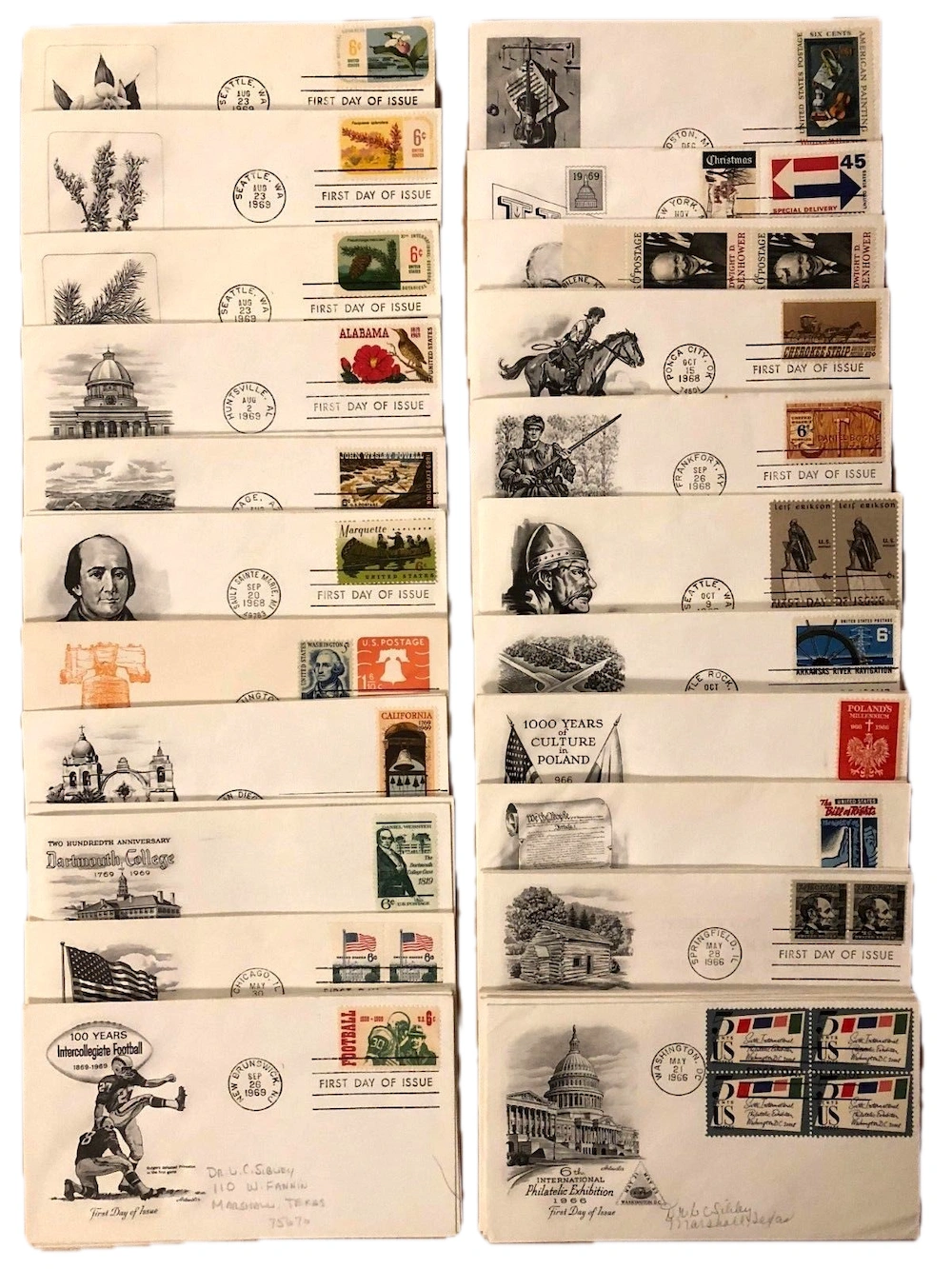 First Day Covers
First Day Covers are envelopes postmarked on the official first day a new stamp was issued. They were once extremely popular collectibles, and companies produced decorative envelopes, printed albums, subscription programs, and complete sets for collectors.
The problem is that enormous numbers were saved. Most remain in excellent condition because they were created as collectibles and were never intended to travel through the mail.
Today, there are far more common First Day Covers than there are people interested in buying them. Albums from the 1950s through the 1980s are especially common. We have reviewed many of these collections over the years and have never encountered a typical First Day Cover that added significant resale value to a collection. This imbalance between surviving supply and collector demand is one reason the stamp market is different from the coin market.
Extremely rare pieces of early postal history do exist, but they are entirely different from the mass-produced commemorative covers normally found in inherited collections.
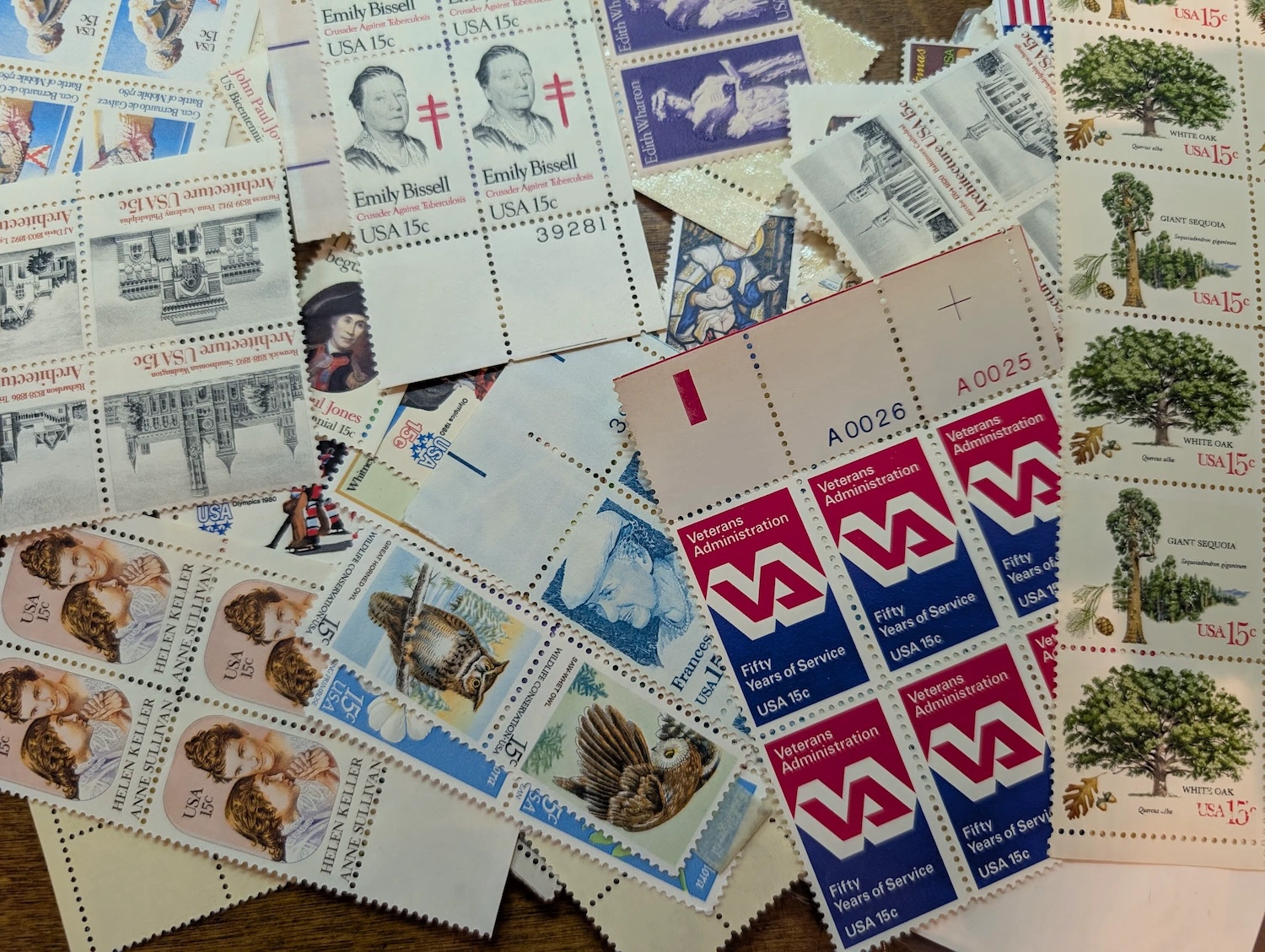
Unused 3-Cent, 4-Cent and Other Low-Denomination Stamps
Many stamp collections also contain full sheets, partial sheets and blocks of unused commemorative stamps. Common denominations include 3 cents, 4 cents, 5 cents, 6 cents, 8 cents and 10 cents.
These stamps are usually genuine unused postage. They are not necessarily rare, however, and most have no meaningful collector premium.
The United States Postal Service explains that older denominated stamps can still be used at the value printed on them. A 4-cent stamp still provides 4 cents of postage.
That sounds better than it is.
At modern postage rates, using low-denomination stamps may require placing dozens of them on a single envelope or covering a large portion of a package. Sometimes there is not enough practical space for all of the stamps required. Applying, counting and canceling large quantities of old stamps can also be inconvenient for both the person mailing the package and the postal employee handling it.
The Post Office does not simply buy an old stamp collection back for cash. The owner must either use the stamps as postage or find someone else willing to use them.
An Interest-Free Loan to the Post Office
In a practical sense, many collectors gave the Post Office a very long interest-free loan.
They purchased postage years or decades before it would be used. The Postal Service received the money immediately, but many of the stamps were placed in albums and never redeemed through the delivery of mail.
The stamps may still technically provide postage, but collecting on that value can be surprisingly difficult. Someone must spend the time separating them, calculating the denominations and attaching enough of them to current mail.
This is why old postage is commonly sold in bulk for less than its total face value. A buyer is not purchasing it as a rare collectible. The buyer is accepting the inconvenience of eventually using it.
Why Didn’t These Stamps Increase in Value?
Collectibles usually become valuable when demand is greater than the available supply. Common modern stamps developed in the opposite direction.
Stamp collecting was promoted widely, and millions of people saved the same issues. The National Postal Museum notes that some mid-20th-century commemorative issues were printed in average quantities of approximately 40 million stamps each. You can explore the history of these issues through the Smithsonian National Postal Museum.
Because collectors carefully preserved them, large quantities still survive in unused condition. At the same time, the number of people building traditional stamp albums has declined. Large surviving supply combined with limited current demand results in very low resale prices.
Should You Throw Them Away?
No. While common First Day Covers and low-denomination postage usually have little or no resale value, there is also very little to lose by keeping them. Many people simply save them for sentimental reasons, while others eventually use the unused stamps for postage.
It’s also worth remembering that not every stamp collection is the same. We still recommend having inherited collections reviewed, as better stamps, covers, or other postal history can sometimes be mixed in with the common material.
That said, First Day Covers, common commemorative stamps, and albums of low-denomination unused postage are among the least valuable items we regularly encounter. In most cases, they add little or nothing to the amount a dealer can pay for the collection.
We Review Entire Stamp Collections
Oakton Coins & Collectibles reviews inherited stamp collections along with coins, paper money, precious metals and other estate items. We can help separate material that may deserve additional attention from the common First Day Covers and postage sheets that dominate many collections.
For more information about the types of stamp material we encounter, visit our stamp collections page.
If the stamps are part of a larger inheritance, we also work with inherited coin collections and mixed estates containing coins, paper money, jewelry, bullion and other collectibles. Learn more about selling coins or read our guide to identifying inherited coins.